 Peter Founder
Building My Own Ad Tracker: Adv Tracking v1 with Claude Design
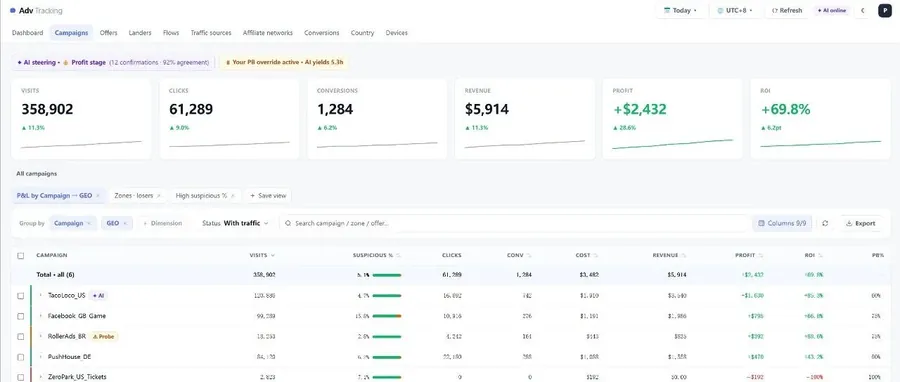
In my last post I mentioned that in the second half of the year I’d build a custom tracking system. With some free time these past few days, I went straight to it!
For now the system is named AdvTracking; the overall framework and thinking have been brewing for a while. The plan takes the lightweight route, and most importantly, I can use my spare time to slowly build and polish a product that’s my own.
But it’s not just a product. It directly affects my ad results, which makes it pretty interesting.
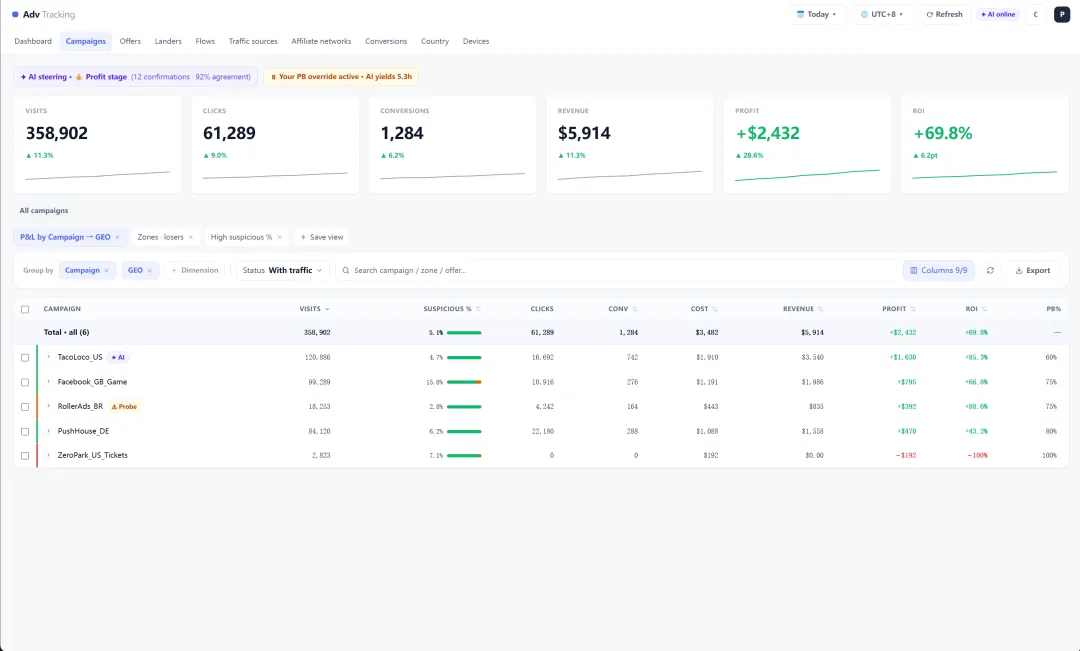
Claude Design
With an agent like Hermes, you can put together a lightweight tracking system very quickly. It can do a lot of things, but I wasn’t quite satisfied with some of the results.
Fast, yes. But I prefer to grind it out bit by bit myself.
The trackers on the market are much the same in features; if you want something custom, it comes down to adding features by hand.
Besides, building a product with your own hands that you use with real money on the line is a pleasure in itself. That’s probably the other payoff of tinkering.
So this time I started from Design, right down to the color of every icon passing through my own selection. For most of the UI design, I only need to lift a finger, pick the colors and effects I want, and leave the rest to Claude.
This Design System was previously built for my ad automation system. This time I’m iterating directly on top of it, no need to start from zero.
Two parts are settled so far.
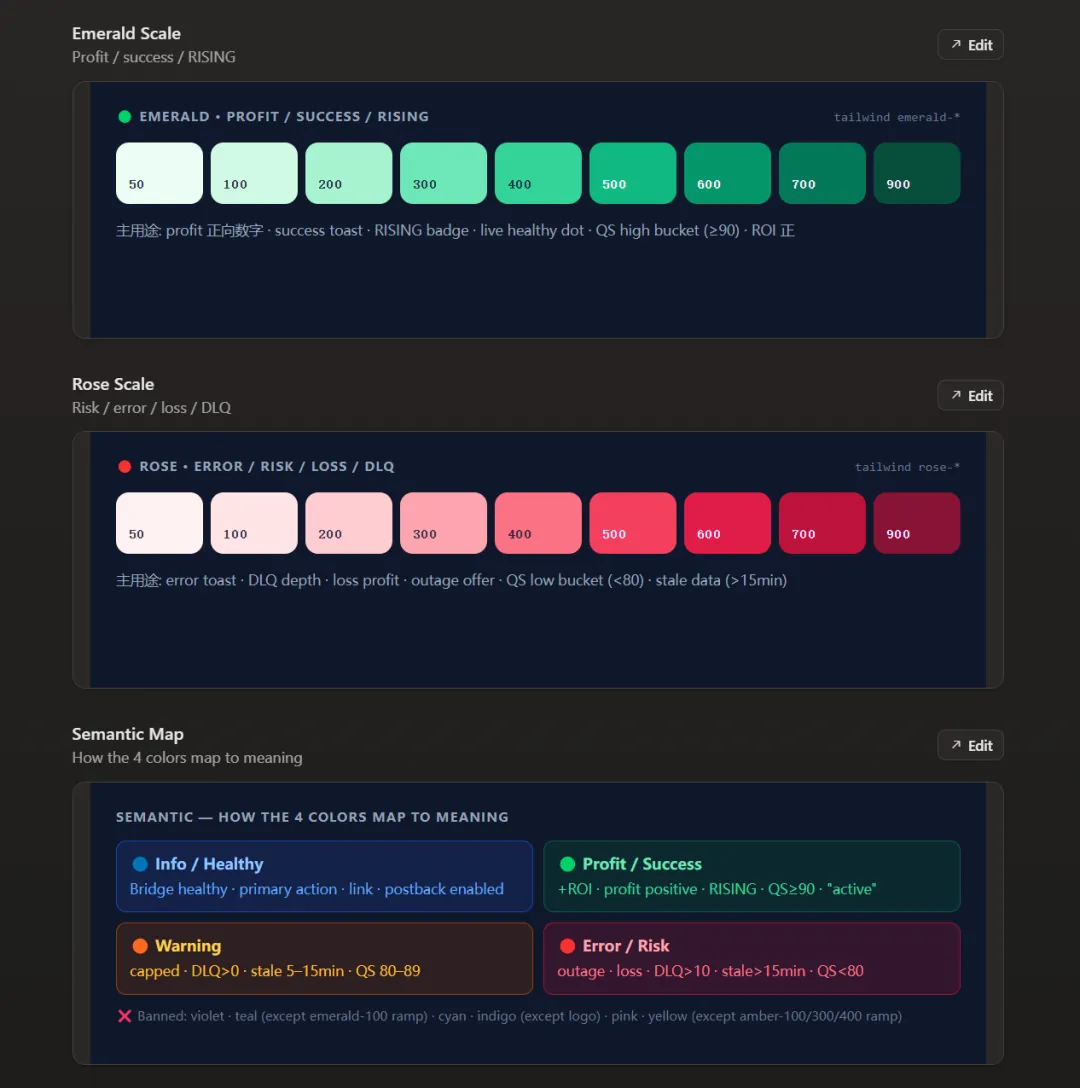
One is the color rules. Emerald only for profit and positive ROI, Rose only for losses and alerts, Blue for link health, Amber for warnings. Four colors, four meanings; once they’re locked in, I never have to think again about what color a number on any later page should be.
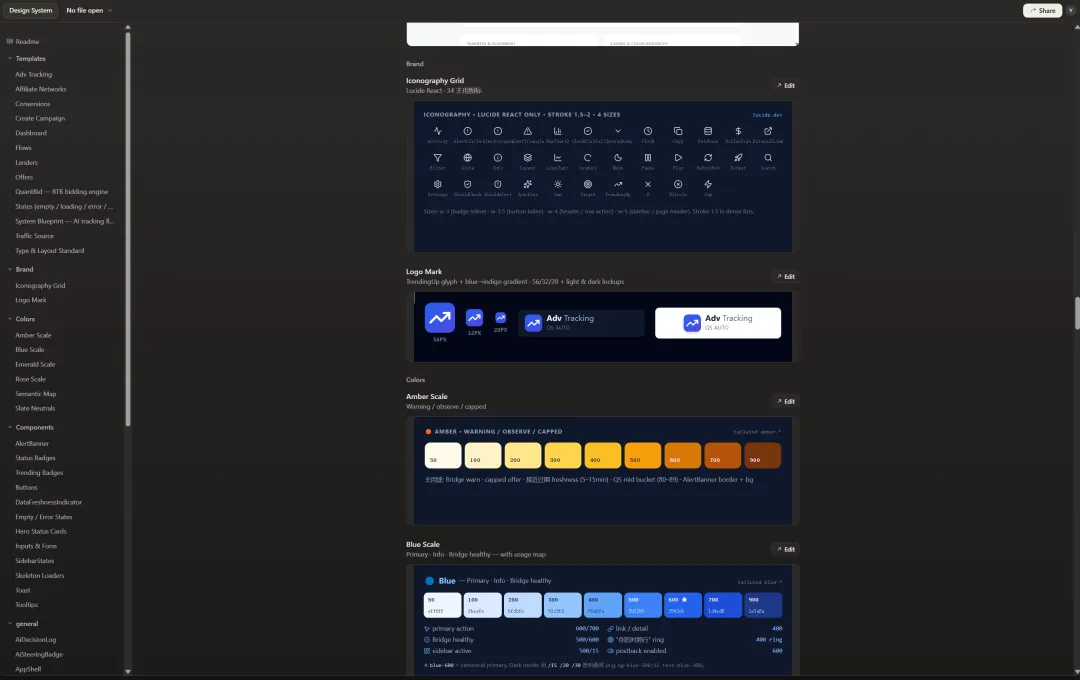
The other is components. Data tables, KPI cards, Offer forms, a weight rotation editor: 20-odd components, all with their states and usage defined. Every later page pulls its parts from here, so it won’t get messier as it grows.
Seamless hand-off into Claude Code
Once the Design is finalized, the whole thing gets packaged as code: 50-odd style tokens, plus the component library and page templates, which Claude Code reads and calls directly.
In other words, the colors and components I picked in Design become ready-made building blocks on the Code side.
Claude Code is only responsible for execution. On that front, they do a pretty good job.
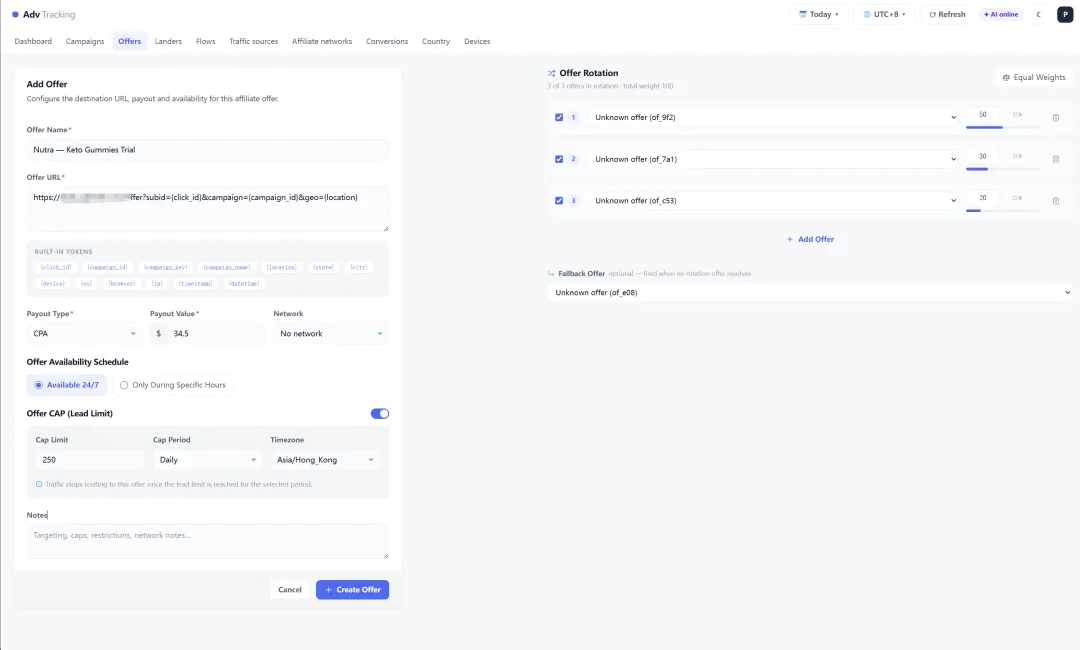
Take the Offers page as an example: Offer rotation weight allocation, Fallback offer, stopping when the CAP is reached, one-click insertion of tracking tokens. Later on I’ll add the features I built before, along with automatic offer weight rotation.
A few thoughts
Everything above is the visible part. The back end is the really tough part.
Tracking is different from building an ordinary back office; what it eats most is concurrency. Every click is a request, and once the ads scale, hundreds of thousands or even millions of them pour in. First you have to be able to take the load; only then can you talk about anything else.
For version one, the goal is to get the core modules running smoothly first: Campaign, Offer, traffic sources. Then validate the data with test traffic.
Once it’s properly finished, I’ll try handing it to an Agent to manage.
No rush this time. Build and polish as I go.
New articles and quick notes from Peter.