 Peter Founder
Cloudflare 500 Outage: Is Your Affiliate Campaign Data OK?
Keywords for this post: Cloudflare Pages, BeMob, AWS, CPA, Affiliate, Server Status
Last night, half the internet went down. The reason was simple: Cloudflare, the site-building tool so many of us rely on, couldn’t be reached for several hours.
For those of us working in paid traffic, server stability is the foundation the business runs on. You don’t notice it day to day, but the moment there’s a wobble, the impact on the business is very direct.
Within 1 month, my ad campaigns ran into two “infrastructure-level” anomalies worth recording: 1. Last month it was AWS us-east-1, which affected the postback efficiency of the BeMob tracking system I use. 2. Last night it was a Cloudflare node anomaly, which blocked access to the landing pages I host on Pages.
Both look like “connection problems”, but judging from my actual campaign data, their effects on CPA ad performance are fundamentally different.
This post is a technical review of what a “data hub” not responding, versus a “front-end page” not opening, each did to the campaigns in concrete terms.
Infrastructure: AWS & Cloudflare
The infrastructure behind ad campaigns: tracker and hosting
01 AWS + BeMob: a data delay, and what it hit was “weight”
A recap of last month: some AWS (Amazon’s cloud) services had a disruption.
BeMob is the paid tracker I currently use, and part of its underlying architecture depends on AWS services.
This disruption didn’t take BeMob down; it caused an obvious delay in data postbacks.
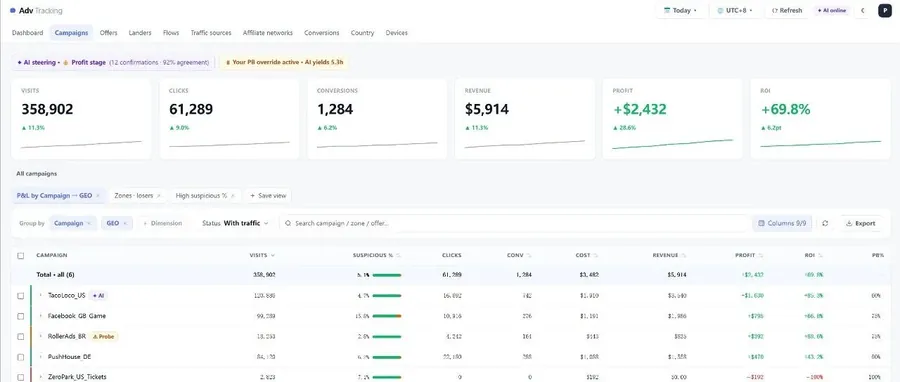
What it looked like: on the traffic side, ads were showing normally, traffic kept coming in, and users could open the page and complete a conversion normally. But in the BeMob dashboard, real-time data updates stalled. More critically, in the traffic source’s algorithmic judgment, the receipt of that conversion information “arrived late”.
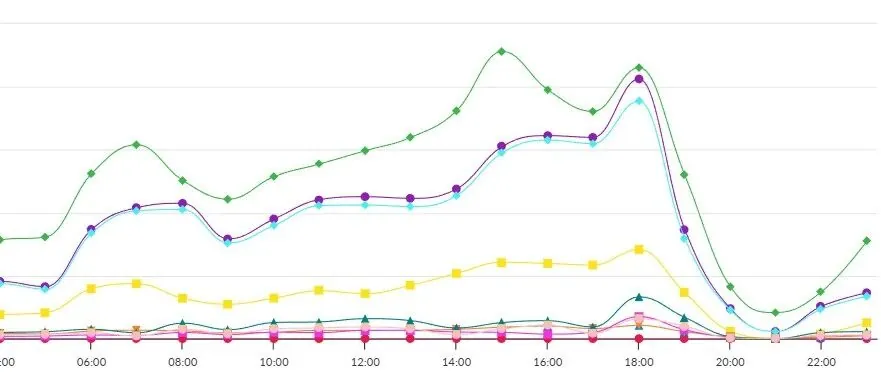
Data postback delay (AWS disruption) → back to normal
Conversion metrics fluctuated during the data delay
Business impact: CPA campaigns in particular depend heavily on eCPM and real-time feedback mechanisms. Because the postback wasn’t timely, the traffic source’s algorithm could misjudge the Offer’s conversion efficiency as falling, which in turn affects the CPA Quality Score.
Although the service recovered quickly, all the data synced back and conversions were unaffected, media buying depends on the continuity of “momentum”.
A score fluctuation can lead to a change in traffic tier. It took some effort afterwards to adjust and pull the volume back to its original level.
Summary: a “soft injury”. Unpleasant, but the data was complete in the end; what it mainly affected was the account’s short-term weight.
02 Cloudflare Pages: last night’s response failure, and what it consumed was “budget”
Last night’s Cloudflare Pages situation was completely different, and the impact on the business was far more direct.
Cloudflare Pages is the service I use to host static landing pages.
If BeMob is the counting house, Cloudflare Pages is the storefront. Last night the storefront’s door wouldn’t open.
What it looked like: the campaign side was still running and budget was being spent (CPM/CPC charged as usual), but after users clicked the ad, the page returned a flood of 500 Internal Server Error status codes. Valid visits fell off a cliff.
500 Internal Server Error. Cloudflare Pages response failure. Visits = 0
A 500 error means traffic can’t be received while budget is consumed
Business impact: the tracker was still working normally, but because the connection was cut before the traffic reached the landing page, no useful data could accumulate.
With the AWS delay, the user experience was still acceptable and conversions could still happen; the Cloudflare Pages failure cut off the user’s access path outright.
That led to wasted budget: the ad spend went out, but the page never loaded. That spend is a sunk cost.
03 Infrastructure lessons for affiliates
These two incidents remind us that alongside optimizing creatives, adjusting bids and testing Offers, controlling the underlying technical risk matters just as much.
When infrastructure hits a force-majeure wobble, algorithmic strategy often can’t do anything.
We can’t control third-party providers’ stability, but as full-time affiliates we can build more proactive defenses:
Set up an independent Uptime Monitor.
I recommend configuring a third-party monitoring tool to check landing page status at high frequency. As soon as it detects a missing keyword or an abnormal status code (especially the 500 series), pause the traffic source’s Campaign via API in time to stop the loss and protect the principal.
An AWS disruption can hit your weight; a Cloudflare Pages failure can burn your budget. With traffic costs rising by the day, safeguarding infrastructure stability is safeguarding your margin.
👉 Feel free to talk to me in the comments or on X.

Disclaimer:
-
The content of this post represents only the author’s own hands-on experience and data review over a specific period, and does not represent the overall service quality or long-term status of AWS, BeMob or Cloudflare.
-
Disruptions to internet services are a common phenomenon in the technical field; the incidents mentioned here may have been limited by the author’s network environment, configuration or specific nodes, and are sporadic in nature.
-
This post is meant to share technical response strategies and risk control experience; it is not a negative assessment of any brand or service, nor investment advice.
-
When choosing technical service providers, readers should rely on official announcements and service level agreements (SLAs).
New articles and quick notes from Peter.