 Peter Founder
Ten Years in Affiliate Marketing: To Those Still on the Road
The whole piece is typed by hand, 3,000 characters.
I joined the industry as an intern at the end of 2015. Today makes it a full ten years.
Looking back, being able to stay in one industry for 10 years is a kind of luck. The friends who ran alongside me back then have, without exception, all left the industry. Even the company that trained me no longer exists.
Lately a lot of newcomers have been adding me, and in those conversations I see my past self: that uncertainty, that feeling of being lost. It indirectly moved me to write this ten-year piece, as a keepsake.
Joining as an intern, and my first assignment
Back then, our interview was very simple.
A few of us roommates went together and all got hired. The resume I’d spent a whole evening on never came into play.
My major was ERP software and e-commerce; I’d never touched overseas advertising. The interviewer asked only two things of us: patience, and willingness to learn. Only later did I understand how hard those two things are in affiliate marketing.
My first assignment came quickly. I was put in the creatives group, known as the PS (Photoshop) group. My roommates went to the Excel group.
Example 1: run a licensed Chinese utility offer on Facebook, a phone cleaner/booster app. Target region: Southeast Asia.
In a rush of enthusiasm I made an image of Kung Fu Panda holding various boosters. I’d looked up recent trends on Google Trends, and my thinking was still stuck on the hit movies of the time.
Obviously, that $10 was wasted.
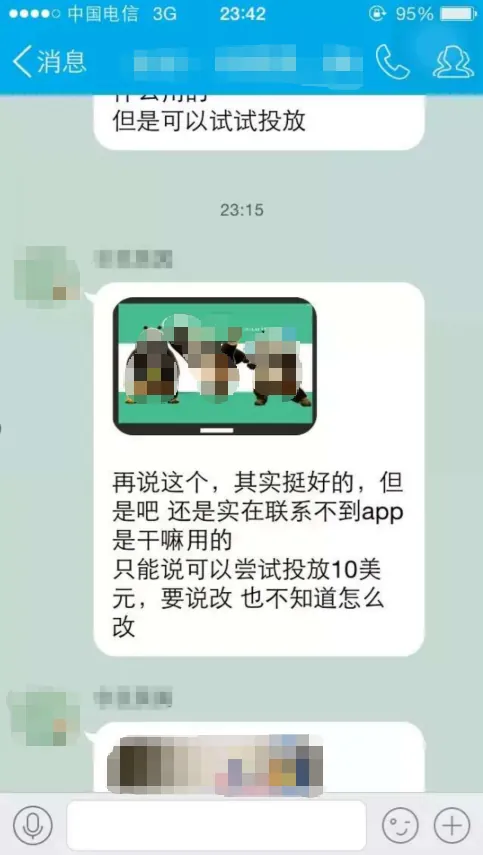
The first creative I made was far from ideal, but it completely opened up my interest. So this is how it’s played: imagination gets validated through ad spend. That had a deep influence on how I later ran Custom Arbitrage Pages.
From then on I spent my evenings after work reading everything I could on the subject, hoping to grow fast. That’s how I found my first free forum: AdvertCN, a Chinese affiliate forum.
AdvertCN: a whole new world

Honestly, it was through AdvertCN that I really came to understand how media buying works. Being in the PS group, I had no access to the ad accounts and never saw the Excel reports.
But the forum was lively back then; every day someone was sharing how to set up an IM (iMobiTrax) tracker or test creatives. Later I set up IM myself a dozen-odd times, which planted the seed for eventually quitting to go solo.
One day I saw someone there sharing how they ran PPV, Dating and Zero Click. I passed it on to my boss and said I thought it was an opportunity worth testing. He asked a few questions, then moved my desk to sit right across from him.
He had me take over the weekly Excel reports from another colleague, and opened a traffic source for me, Selfadvertiser, with a $50 daily test budget.
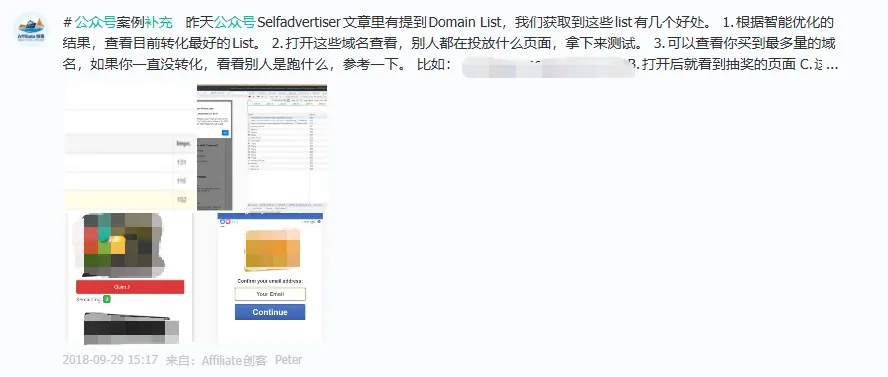
For me at the time that was a huge encouragement. Your work and your attitude to learning had been noticed.
In fact, I later learned the boss had been on the forum for years and knew the play all along. Which confirmed those two requirements from the interview.
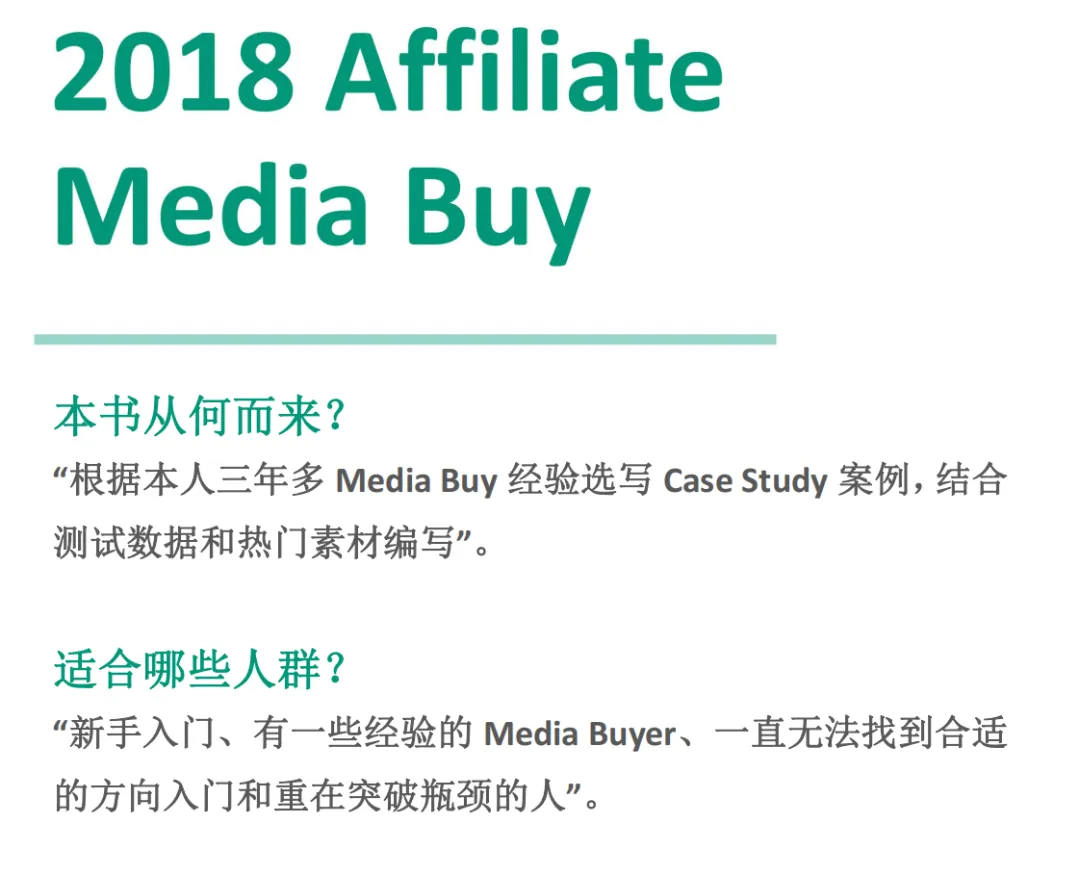
Somewhere in there I also wrote the “2018 Legit Media Buy Tutorial”, where I covered its Domain traffic play, experience I’d figured out on my own after work.
After the better part of a year learning on the forum, the business in my hands changed too.
Utility apps going global: from CPI to CPL
I witnessed the boom of Chinese apps going overseas en masse, a bit like the current buzz around the one-person company (OPC). Ten years is another full cycle, but the core play hasn’t changed.
Some large Chinese networks rose with the app-export wave; Mobvista, Yeahmobi and Avazu were the representative batch.
We tested a huge number of offers day to day, rotating and testing new ones every day, so after all these years I’m tired of testing offers.
It also helped me understand, indirectly, why the company didn’t want to keep doing media buying (there were strategic and business-development considerations too) and pivoted to being an advertiser and taking apps overseas. Which indirectly led to my later idea of going solo.
Sometimes newcomers who add me ask similar questions. Think about it: once you’ve tested thousands, tens of thousands of offers, you also know which ones work and which don’t, and which GEOs will lose money on the payout alone.
That’s why you need patience. But patience and learning alone are far from enough; you also need business connections, budget, the plays from the inner circle, luck, and a testing method.
“Everyone Says They’re Playing DSP+. What Are They Actually Playing?” The arrival of the big click suddenly threw off our testing rhythm. We formally moved from the CPI era to CPL, with Sweepstakes as the flagship.

The crazy DSP era
Real-time bidding (RTB) was taking off then, and DSP platforms appeared one after another, but they shared a common loophole.
Uploading creatives as a JS Tag could turn every ad impression into a click. That’s the so-called big click.
That period showed me what a $10,000-a-day play looks like, but it was patched quickly. Keep running plays that fight the platform and what you burn is inevitably account resources and business trust.
From media buying to the idea of going solo
After a peak there’s naturally a trough. That applies in any industry, like the 80/20 rule.
Afterwards the company dropped the media buying business entirely and went all in on taking apps overseas.
I was assigned to take over that business, with dozens of traffic sources running at the same time.
There was no particular cap on the daily budget, and each day I handled the actual campaign work. In fact, I was still bullish on affiliate media buying then, and Native and Survey were just getting started. I suggested pivoting that way, but it wasn’t taken up.
So the idea of quitting to go solo took shape. By then I’d built up the skills: creative production/spying, business development, tracker setup, lander editing, data optimization.
More importantly, I’d already run hundreds, even thousands of campaigns.
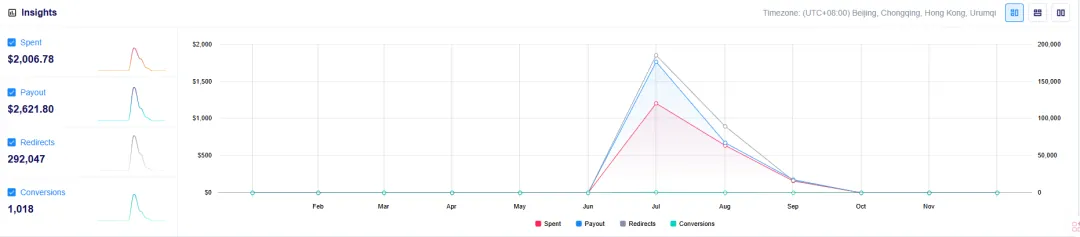
Freelancing: half a year of stepping on landmines and paying tuition
After cashing out my housing provident fund savings, I set out on the freelance road.
I started from CPL. With a few years of work experience, I was already very familiar with the traffic platforms’ rules and how they work. But I still overestimated myself.
At the company the budget had no ceiling; now I was spending my own money, $50 at a time, which at one point got my card flagged by risk control.
At the same time I ran into the bank rejecting incoming payouts and a network running off with my money. The bank’s customer service called, asking for contracts and an explanation of the other company’s shareholding structure. A double blow, and my campaigns slowed down.
It took me a few days to sort out the payout problem. I tried every known option on the market, and in the end Wise solved it for me.
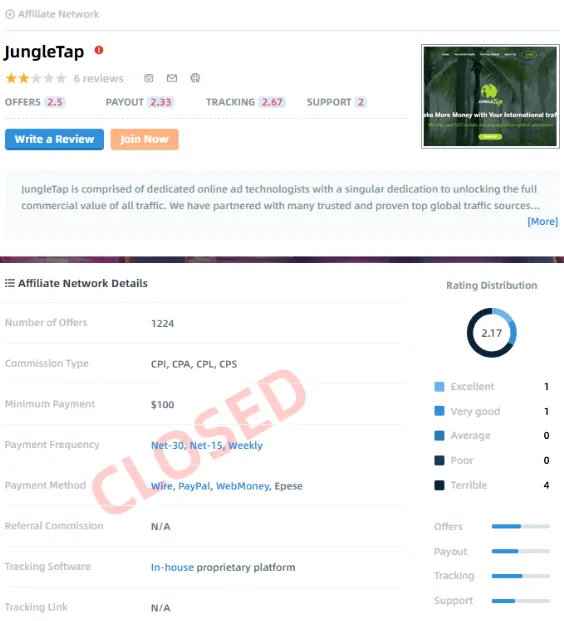
Still, it was a rough start. My first overseas network: JungleTap.
After paying a few invoices, it ran off, and I lost close to $1,200.
Why did I pick it? At the time they had a lot of UC News offers, and the first few Net 15 payments went through normally.
Only later did I learn it was a third- or fourth-hand reseller. The pattern is to pay quickly a few times, then start stalling on invoices, and finally just disappear.
After that nasty experience, I took two weeks to regroup.
I made a decision: drop CPI completely. By then e-commerce CPI (CPE) and utility offers had started to focus on user retention and shopping KPIs, and the traffic sources I had were of uneven quality, hard to bring up to the requirements.
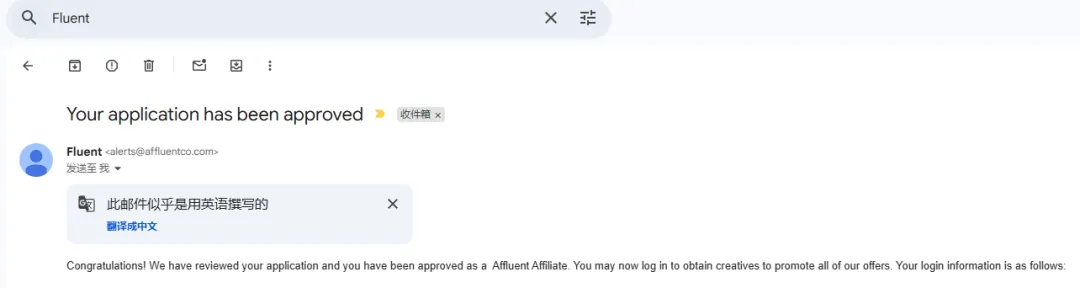
Around then a direct advertiser caught my attention. It was Net 30, though I later worked my way up to weekly payments. It fed a lot of affiliates and Chinese networks: Fluent, one of the biggest Sweepstakes advertisers in the US.
A hundred flowers bloom: direct advertisers, COD, Native, Push
Every road leaves traces. This is the account-approval email from back then, still vivid in my memory.
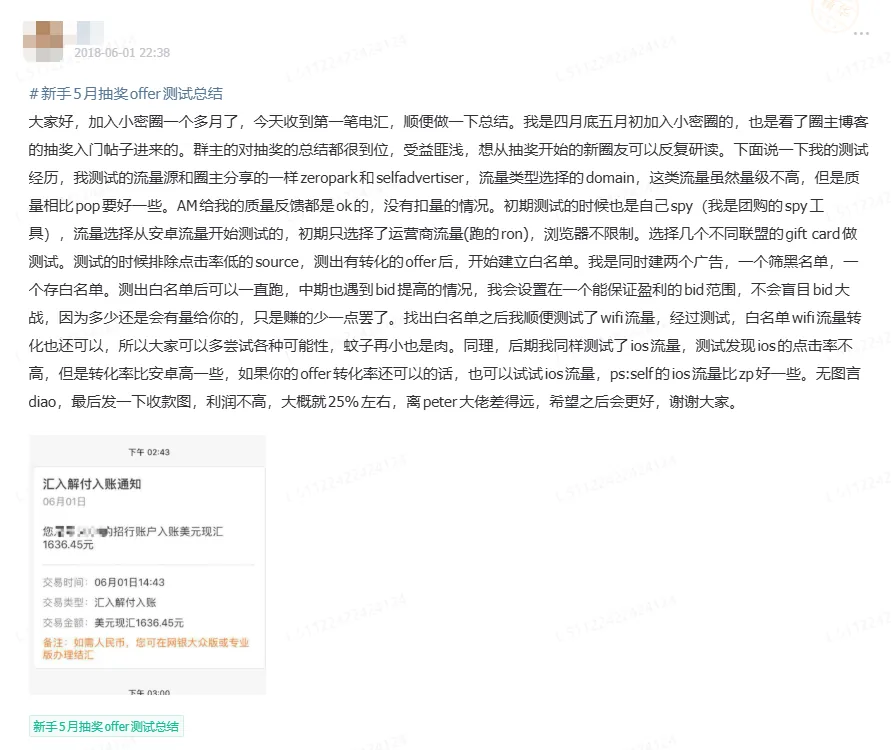
After finding the profit point, I also brought some community members along to run Sweepstakes.
Running on Domain traffic, the results were good. Then COD, Native and Push all arrived, and it suddenly felt like a golden age of media buying with everything blooming at once.
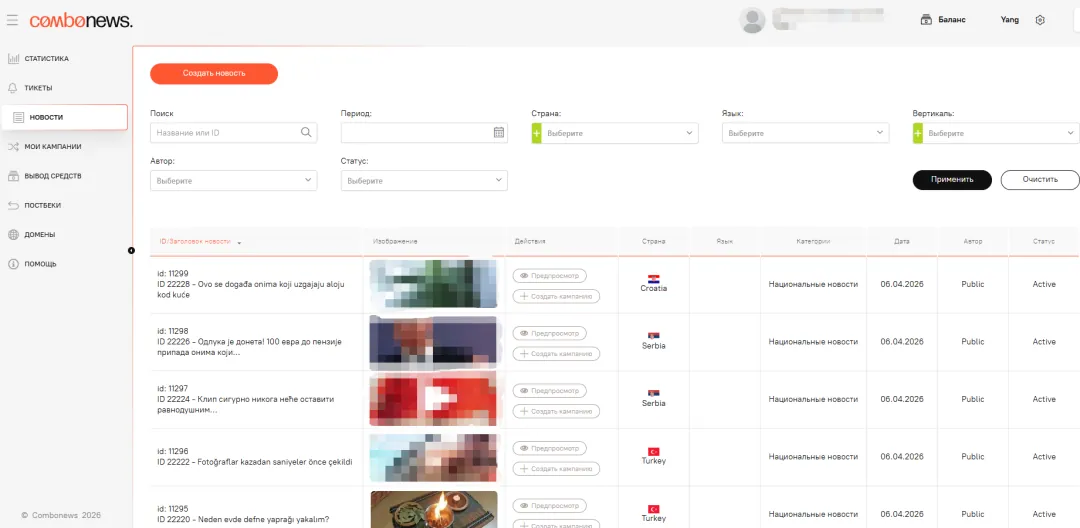
Speaking of COD, I have to mention Adcombo. It’s an old-school network, still active today.
Recently they even built a platform for Facebook monetization: Combonew.
Back then I ran plenty of their COD offers. But the pain point of the network COD model is obvious: the return rate is very high, generally 40-50%, and anyone who could get to 80% was a rare talent.
Right after that, PropellerAds launched Push Notifications as a new traffic source. It’s still active today, but the play has long since changed.
After Google’s new Chrome browser policy last year, a large batch of users were automatically unsubscribed, and the passive income play was completely blocked.
But I didn’t go deep in that direction, because there was a play that attracted me more: Smartlink/Arbitrage Page.
I first learned the Smartlink concept through kimia (later renamed ArmorAds).
Very early on they made mVAS part of their smartlink, using smart rotation to solve the losses caused by mVAS offers pausing without warning.
Then Afflow (later renamed Monetizer) came out and spread the Smartlink play everywhere. Everyone knows it well by now, and some friends are still using their platform today.
I tried every play going, but I kept looking for a direction that was truly sustainable.
Finding my own rhythm
These past few years I’ve been immersed in finding projects for myself.
From CPI at the start to Revshare today, I’ve switched plays many times, and it’s still called media buying.
When I came back to writing on my WeChat Official Account last September, I mentioned what I’d been doing in the years before. Then AI arrived and completely changed how I work.
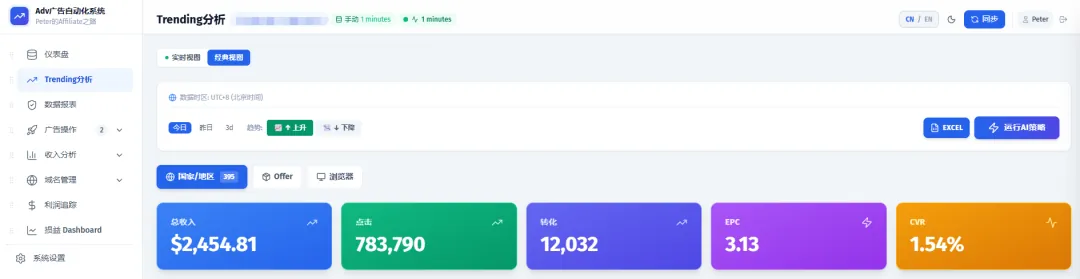
Especially in the past few months, using AI coding I’ve built my own app, ad system and automation tools. In a few months I’ve learned more than in the previous few years, and it’s getting more addictive.
As the AI barrier dropped, a lot of ideas got validated. In the middle of vibe coding, I’m reminded of that feeling from making ad creatives back in the day.
The only difference: this time I’m the one directing.
The next ten years
At the speed AI is developing now, the era of the purely human media buyer is over.
I’ve talked before about “The AI Media Buyer Era: What to Do When Algorithms Learn to Buy Media”.
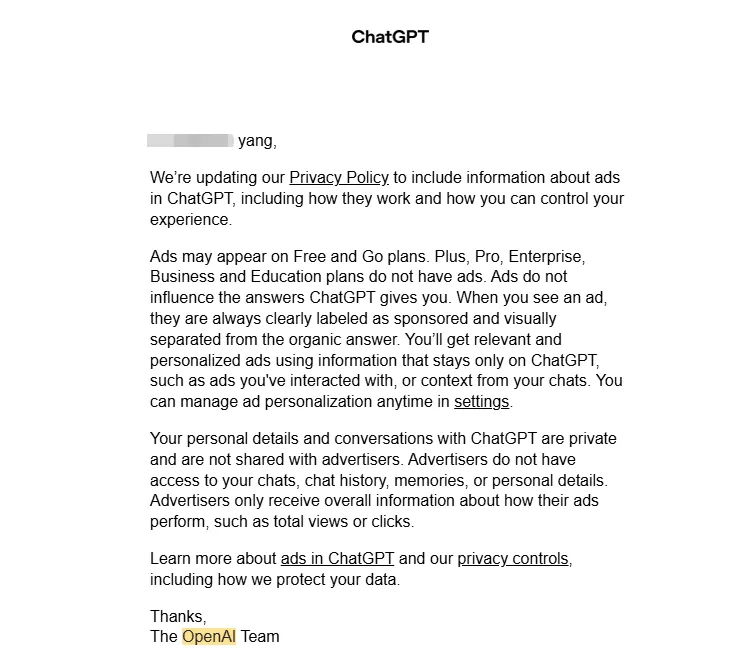
But affiliate marketing will always be here, and online advertising will show up in ever more forms. For example: OpenAI has started doing ads too, and since Meta brought in Manus, testing creatives is no longer a chore.
For TikTok ads, one set of video skills can quickly generate high-quality clips of ten-odd seconds. All these changes bring a flood of testing opportunities.
So in your eyes, is what you see opportunity or replacement? That also decides whether you’ll still be in this industry in the next ten years.
Even as AI agent companies start advertising, the underlying logic of how this industry makes money has never changed.
Two sentences to close: growth is never the product of talent; it’s someone willing to reach out and walk you through the first step.
Beyond your own persistence, it comes down to the people who light the way for you on the road.
New articles and quick notes from Peter.