 Peter Founder
Token Has Changed: From Ad Tracking Parameter to AI Compute Unit

The first place I learned what a Token does was in ad tracking parameters.
Anyone who has run ads knows this: you put {token} in the Traffic Source’s URL template, and when a user clicks, it gets replaced with a unique identifier that travels with that click the whole way, into the Tracker, on to the Landing Page, and back to the ad platform via postback when a conversion happens.
One string of characters, and the whole chain is strung together.
Without the Token, the postback relationship between Tracker, Traffic Source and Network is hard to truly connect.
The Token is the nerve signal of the entire ad system. Without it, even the best traffic is a pile of loose sand.
1. Now, Token means something else
In the AI era, Token has become the unit for metering compute. You send a sentence, the model replies with a passage, and behind it thousands upon thousands of Tokens flow. OpenAI, Anthropic, every large model vendor prices by it.
Overnight, Token went from a small parameter in ad tracking to the most important unit of consumption in the AI era.
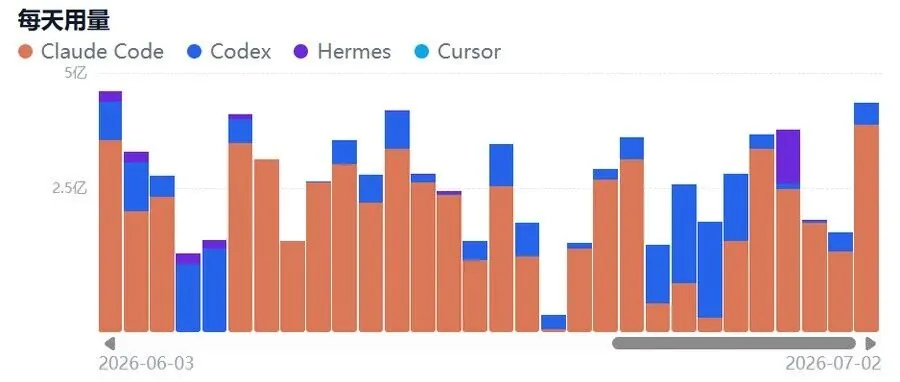
And people went from posting screenshots of using the best model to showing off how many tokens they burned today.
From here, compute will most likely get cheaper, large models will keep getting stronger with each iteration, and the barrier will keep dropping. By rights, this should be an era where everyone can produce results.
The reality: the people who actually get results with AI are still a minority.
Why?
I think the answer is hidden in the Token’s original meaning.
2. What a Token really does: guarantee direction and accuracy
The Token in ad tracking solves the problem of signal transmission: it lets the system know where this conversion came from, what to optimize, and which direction to put resources behind.
It doesn’t produce traffic itself, doesn’t produce conversions, doesn’t produce profit.
It does one thing only: keep direction and data accurate
Without it, no matter how hard your ad system runs, the optimization algorithm is blind and every resource goes down the drain.
Compute is traffic, is resources, is the money in your hand.
But compute itself doesn’t know where to run.
Give AI a vague request and it produces a pile of content that looks useful and isn’t. Give it a direction that’s off, and it executes the mistake with extraordinary efficiency.
When the direction is wrong, the more Tokens you burn, the further off you drift. This is essentially the same problem as running ads without a tracking Token.
I’ve watched the people around me who genuinely get results with AI, whether in media buying, content or product.
What they have in common isn’t using more tools, writing better prompts, or spending more Tokens.
It’s this: before they use AI, they already know what problem they’re solving.
Not a big empty goal like “I want to use AI to be more efficient.” A specific bottleneck, a pain that really exists.
With that, AI truly becomes an amplifier. Without it, all the compute in the world is just screenshots in your bookmarks folder.
3. What is truly scarce in the AI era?
Not compute. Ideas, and the ability to take an idea in the right direction.
Those two things a model can’t give you, Tokens can’t buy, and tutorials can’t teach.
They come from what you’ve accumulated in this industry, from the pits you’ve fallen into, from the judgment left behind after you’ve truly thought a problem through.
The Token in ad tracking, a string of random characters, has no value in itself.
Its value comes from how the whole system understands and uses it.
The compute Token of the AI era follows the same logic.
The resource itself isn’t worth much. The industry judgment in the mind of the person using it is the real chip in this era.

New articles and quick notes from Peter.