 Peter Founder
Case Study: 5 Facebook Campaigns Hit 27.5% ROI in South Africa
CLICKBOX Case Studies · Issue 2 · Special Edition
This is a case study officially published on Zeydoo’s blog, and the subject is me: the 5 Facebook campaigns I ran in South Africa in December 2025, with $5,257 in spend and $1,444 in net profit.
We’ve worked together for seven years, and this time they wrote up my full testing and scaling process as an official case. The numbers aren’t big. What’s worth looking at is the system.
South Africa almost never makes anyone’s Tier-2 shortlist. Most affiliates running Facebook traffic default to Southeast Asia or LATAM, and that is exactly one of the reasons ZA is so workable for anyone willing to really dig in: less competition, high English penetration, and solid conversion rates on Interactive offers.
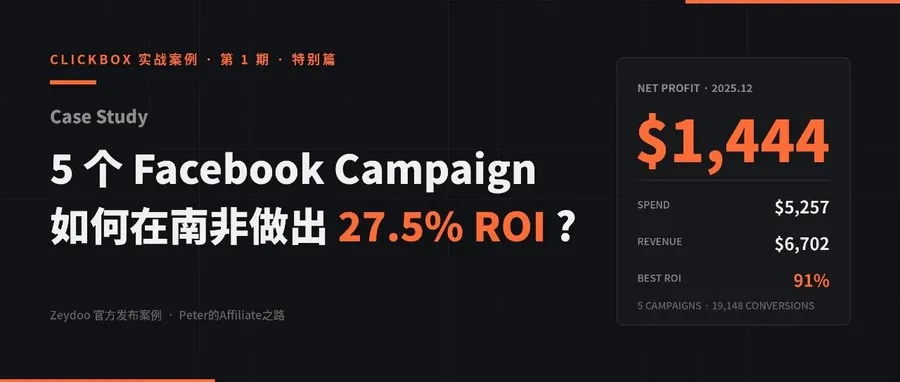
In December 2025 I ran 5 Facebook campaigns for Zeydoo Clickbox in South Africa at the same time. Total spend $5,257, total revenue $6,702, blended ROI 27.5%, with the best single campaign reaching 91%.
The exact numbers are in the table below. But the more valuable part is the system behind the numbers: how to find angles, how to build the test structure, how to manage creatives, and how to make the whole operation stable enough to replicate across several GEOs at once.
Performance data
Here is the data for the full month of December 2025:
| Metric | Data |
|---|---|
| GEO | South Africa (ZA) |
| Traffic source | |
| Run period | December 2025 (12/01–12/31) |
| Number of campaigns | 5 |
| Spend (ad cost) | $5,257 |
| Revenue (generated on the Zeydoo offer side) | $6,702 |
| Net profit | $1,444 |
| Blended ROI | 27.5% |
| Best campaign ROI | 91% |
| Total conversions | 19,148 |
| Bidding strategy | Lowest Cost / Cost Cap |
| Offer | Zeydoo Clickbox (Playable) |
A note on the data: revenue is based on the Zeydoo dashboard. Because of postback timing differences, the spend figures on the Facebook side may differ slightly.
Why South Africa
South Africa has a population of roughly 62 million and an urbanization rate of 67%. It has 11 official languages, but English is the common language of business and media, so campaigns can get volume without heavy localization. Beyond English, Afrikaans, Zulu and Xhosa are the most widely spoken languages, and that matters a lot in the Ad Library research phase I cover below.
In terms of purchasing power, South Africa is one of the most developed economies in Africa. Facebook is by far the dominant social traffic source there, and local users take well to Interactive offers of both the entertainment and the utility kind.
The result of this combination: affiliates willing to step outside the usual Tier-2 defaults can get solid conversion rates at competitive CPMs.
The process: from creative research to scaling
The whole process compresses into four steps:
Step 1 · Spy out creatives that are getting volume. Search Facebook Ad Library in the local language and look for advertisers running several ads at once, with at least one that has been live for 7+ days straight.
Step 2 · Produce variants in bulk. Using the winning angle as inspiration, generate 10+ creative variants with AI and put them into testing.
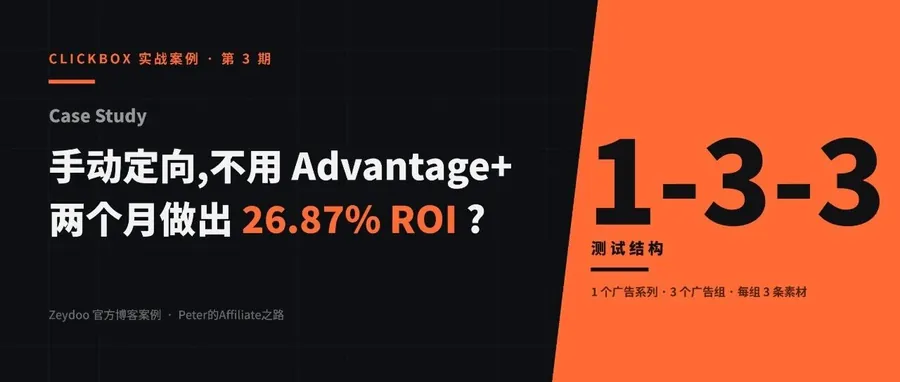
Step 3 · Test and scale. Start new creatives in a 1-2-3 or 1-1-3 structure, move the winners into a 1-1-1 structure to scale, starting at a $5 daily budget.
Step 4 · Optimize. Exclude people who have already converted, build Lookalikes, and rotate offers based on CR and payout stability.
“The core discipline: avoid frequent changes. Big budget swings and constant setting changes reset Facebook’s learning and almost always push CPA up.”
Spy first, then act
Before entering any new GEO, I look at what is already getting volume in Facebook Ad Library. There is one key trick here: search in the local language, not in English.
“A word like ‘win’ almost never surfaces the real winners, because the best-performing ads in Tier-2/3 GEOs are written in the local language, both to get through FB review and to resonate with users. So I first translate the keywords into the GEO’s main local language, which for South Africa is Afrikaans or Zulu, and then search.”
What I look for is advertisers running several ads at the same time, with at least one that has been live for 7+ days straight. If an ad has survived that long, it is most likely making money.
Once I find a good creative, I use it as the inspiration source for AI image generation, produce 10+ variants from the same creative idea, and push them into testing fast.
Two structures for two situations
Not every creative goes into testing the same way.
Proven creatives go straight into 1-1-1. A creative that has already proven itself in other GEOs or in previous tests goes directly into a 1-1-1 structure: one campaign, one ad set, one ad, a high daily budget, and then leave it alone for 2–3 days so the algorithm can finish learning.
Unproven creatives get tested first, then scaled. Start with a 1-2-3 or 1-1-3 structure: one campaign, two to three ad sets, three ads, running in parallel on a low budget. Once an ad set produces stable conversions, duplicate it into a 1-1-1 structure to scale. The testing path: test on a low budget → find the winner once conversions stabilize → duplicate into 1-1-1 and scale.
I never open a new GEO with a big budget. The rules are simple:
- Start at a $5 daily budget
- Never raise the budget by more than 20% at a time
- No more than 3 changes per day
Raise the budget too fast or change settings too often and Facebook resets the learning phase. Once that happens, the algorithm throws away the optimization it built up from existing conversions, and costs go up with it.
Creative rules that lower the risk
Keep the copy short and avoid anything that reads as aggressive. That kind of thing tends to trigger Facebook’s review system before the campaign even gets going. Here is a good example:

Two other rules never change:
- The copy and the creative image must match. Both sides tell the same scene. When they match, users engage, leave comments and react, and that engagement gives the ad extra weight in the auction; when they don’t, CTR drops and CPM rises.
- Put a visible button element in the creative. Static image or video, it has consistently lifted CTR in every GEO I run.
Budget and audience management
Once a campaign has accumulated 500–1,000 conversions, I start excluding people who have already converted and users who have already engaged with the Page, while keeping an eye on ad frequency. Pushing the same ad to the same people over and over only drives up CPM and doesn’t bring new conversions.
On Lookalikes: I don’t count on them until the seed audience has 5,000 conversions. Below that threshold the seed is too thin to produce reliable results. Testing Lookalikes early isn’t wrong, but expecting them to solve your scaling problem before 5,000 conversions is.
Three-offer rotation
I don’t bet all my traffic on one offer. Instead I run three Clickbox offers in the same vertical at the same time. Traffic weighting is adjusted dynamically based on real-time CR and payout stability, so when one offer drops off because of product-side changes or audience fatigue, the rotation absorbs the hit.
This is also why, when you’re putting real money into a Facebook budget, payout stability matters more than the absolute payout:
“There are plenty of survey products on the market, but their CR/payout swings too much from week to week, which wrecks FB unit economics outright. Zeydoo Clickbox holds steady, and that’s why I’m willing to put real budget behind it.”
What to do when a campaign stalls
A losing ad isn’t necessarily a dead ad. When a campaign drops to -20% ROI, I don’t shut it off right away. I try to save it by testing new creatives, adjusting targeting, or switching to a different bidding strategy.
The goal isn’t to rescue every single ad. It’s to keep the whole account moving in the right direction.
Results and campaign breakdown
The 5 campaigns differed a lot in volume, and that shows directly in the results:
| Campaign | ROI |
|---|---|
| #1 (main volume driver) | 24.1% |
| #2 (main volume driver) | 32.7% |
| #5 (only $138 spent) | 91% · highest of the month |
The biggest campaigns, #1 and #2, contributed most of the revenue; the smallest spender, #5, actually produced the highest ROI of the month.
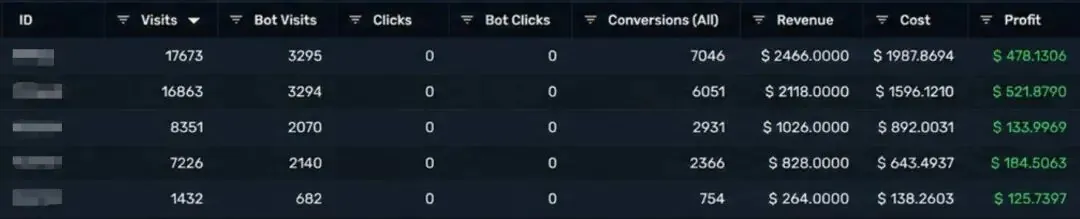
Note: bot visits for each campaign (ranging from 682 to 3,295) have been removed from the conversion stats. The Zeydoo dashboard tracks and filters bot traffic separately.
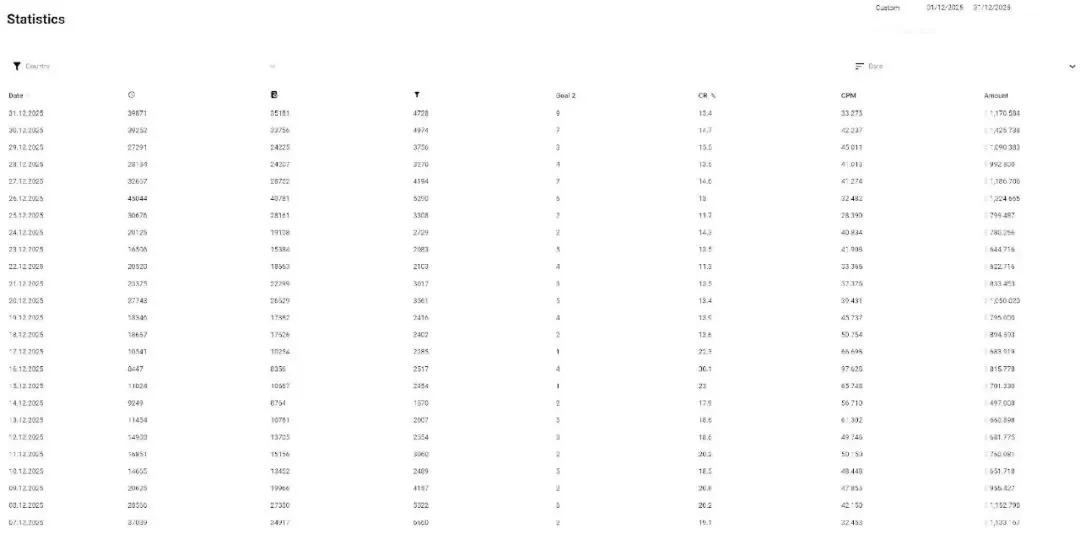
Looking at effective eCPM on the Zeydoo side (revenue per 1,000 visits), the pattern is also clear: the smaller the volume, the higher the traffic quality per visit and the eCPM; after scaling it comes back down and stabilizes:
| Dimension | eCPM |
|---|---|
| Campaign #5 (small volume, high engagement quality) | $184 |
| Campaign #1 (large volume) | $140 |
| Campaign #2 (large volume) | $126 |
| Early December · low-volume phase | $56–97 |
| Late December · after scaling | $32–45 |
Six Lessons Learned
- Search in the local language, not just English. Ad Library search results change with the language. In Tier-2/3 GEOs, a large share of the strongest campaigns use local-language copy. Searching in Afrikaans or Zulu in South Africa surfaces winning angles that simply don’t show up in English searches.
- AI makes creative testing faster. One successful ad can be split into a batch of new variants with AI image generation tools. You don’t have to build every creative from scratch: start from a proven concept and quickly produce enough variants to test different ideas.
- Don’t rush to touch a campaign that’s getting volume. 1-1-1 works because it gives Facebook enough time to learn. Once a campaign starts converting, frequent changes interrupt optimization and push costs up. Sometimes the right move is to do nothing for a few days.
- Every conversion has value. Conversion data helps Facebook understand who is most likely to act. Even a campaign that isn’t profitable yet is building valuable data for later optimization and Lookalikes. Shutting it off too early actually slows long-term growth.
- Don’t bet on a single offer. Running several offers at once makes campaigns more stable. If one offer’s CR drops or its payout changes, traffic can shift to another offer and overall performance takes no hit.
- Facebook traffic and Playable offers are a natural match. Zeydoo’s Playables are built around interactive, gamified experiences, exactly the kind of content the Facebook algorithm rewards with lower CPMs and more reach. Users are already interacting with the creative before they click, so they arrive at the offer warmed up, which shortens the distance from impression to conversion and improves overall traffic quality.
Wrapping up
December 2025 is just one slice of a strategy I’ve been running continuously since 2019. And South Africa is just one of several GEOs I run at the same time: Brazil, Indonesia, Vietnam and the Philippines are all on the list.
For me the goal was never to squeeze maximum profit out of a single campaign, but to build a process that can be replicated again and again across different markets. December’s numbers are what that process looks like when it’s running.
If you want to test the same format, start with these two offers:
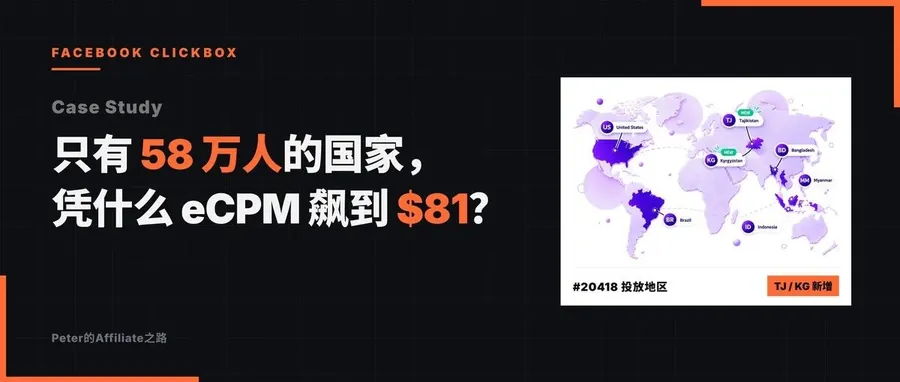
Zeydoo Clickbox | 19037 & 20418 | Facebook traffic
Income and ROI figures here are past results of one person or case, not typical outcomes. Paid traffic can lose money; start with a small test budget.
New articles and quick notes from Peter.