 Peter Founder
HK$3,600 a Year to Keep a Hong Kong Company with No Employees
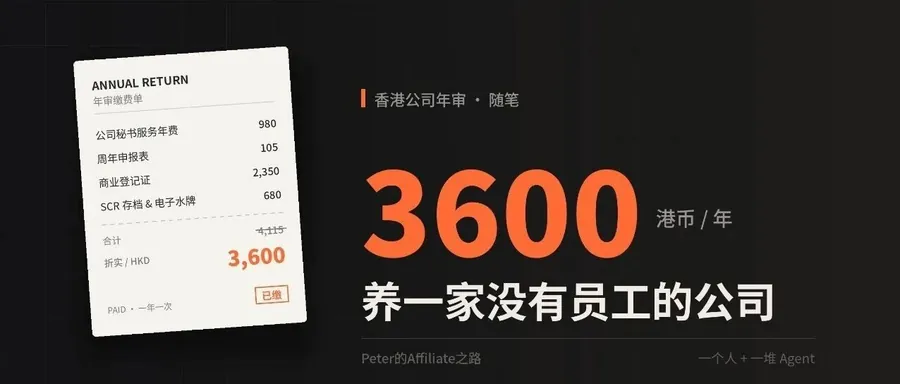
A few days ago I got a message from the company secretary firm: my Hong Kong company is due for its annual renewal.
The bill they sent lists the annual secretary service fee, the annual return, the business registration certificate and the electronic nameplate. Added up: HK$3,600.
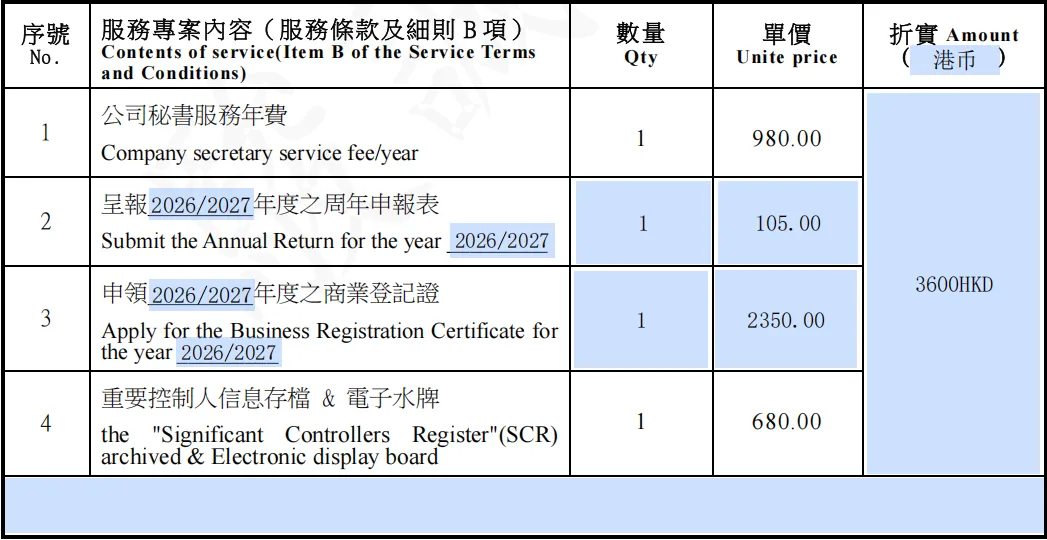
Annual renewal bill
That message suddenly made me feel how fast time flies. Almost a year has gone by in a blink, and both the company and the business in my hands have changed quite a bit.
One person, plus a pile of Agents
In April I wrote “Claude Cowork: My First Digital Employee Does My Company’s Books”.
I didn’t expect it to blow up: it was shared more than 600 times. Having AI check the company’s bank statements line by line, it catches things like an amount entered with the wrong sign or an invoice number with an extra digit, and it was also the one that found the gaps in the list of vouchers the auditors wanted.
Using AI to reconcile a company’s books is something a lot of people are clearly interested in.
And it’s not just bookkeeping. Over the past year, more and more of my work has gone to AI: the ad automation system, offer rotation, a self-built tracker, the knowledge base. I’ve written about each of them in earlier articles.
One person plus a pile of Agents is holding up a company’s day-to-day.
A year on, what changed in the business
Back to that bill. What this HK$3,600 actually pays for, I can now explain clearly.
The most direct change: I no longer have to explain incoming payments.
Before I had a company, affiliate network commissions paid into my personal card would get held up by a third party or the bank, and someone would call to ask what kind of overseas remittance this was.
I said it was advertising commission. She wanted the original contract, plus a description of the paying company’s shareholding structure. When you’re one person taking on work, you rarely have any of that.
Looking back now, that phone call wasn’t really asking about the money. It was asking what I counted as in this chain.
Now the money goes straight into the company account. The contract is there, the invoice is there, and whatever the bank asks for, I send. The whole chain from network to company to bank is closed; there’s no link where I have to scramble for an explanation.
This matters more to media buying than you’d think. When funds get stuck, it’s not that you lose a few days of earnings, it’s that your whole rhythm is broken: you don’t dare raise the budget on a campaign that’s scaling, and an offer mid-test just sits there waiting.
Second, the books are readable now.
Before, ad top-ups and network payouts all went through accounts like PayPal and Payoneer, money in and money out mixed together. Whether I’d made money that month came down to glancing at the balance at month-end and going by feel.
Now the company’s money is the company’s, invoices are filed by month, and I pay myself a salary from the company.
There’s also a new fixed cost.
The biggest item on the bill is the business registration certificate: HK$2,350.
Only after reading the notice did I get it: the registration fee itself is still HK$2,200, unchanged. What changed is the HK$150 business registration levy. It was waived for two years starting in 2024, the waiver expired on March 31 this year, and the levy has been collected again since April 1.

Business registration certificate fee goes up
HK$150 isn’t much. What caught my attention was something else: this money has nothing to do with how well my ads run this year. Whether ROI is positive or negative, the secretary’s annual fee and the business registration certificate get charged all the same.
As a freelancer I never had this kind of expense. In a month with no work, nothing came in and nothing went out, and idle was just idle. Now the company is sitting there, HK$3,600 a year to start, which amounts to setting myself a minimum target every year before anything else.
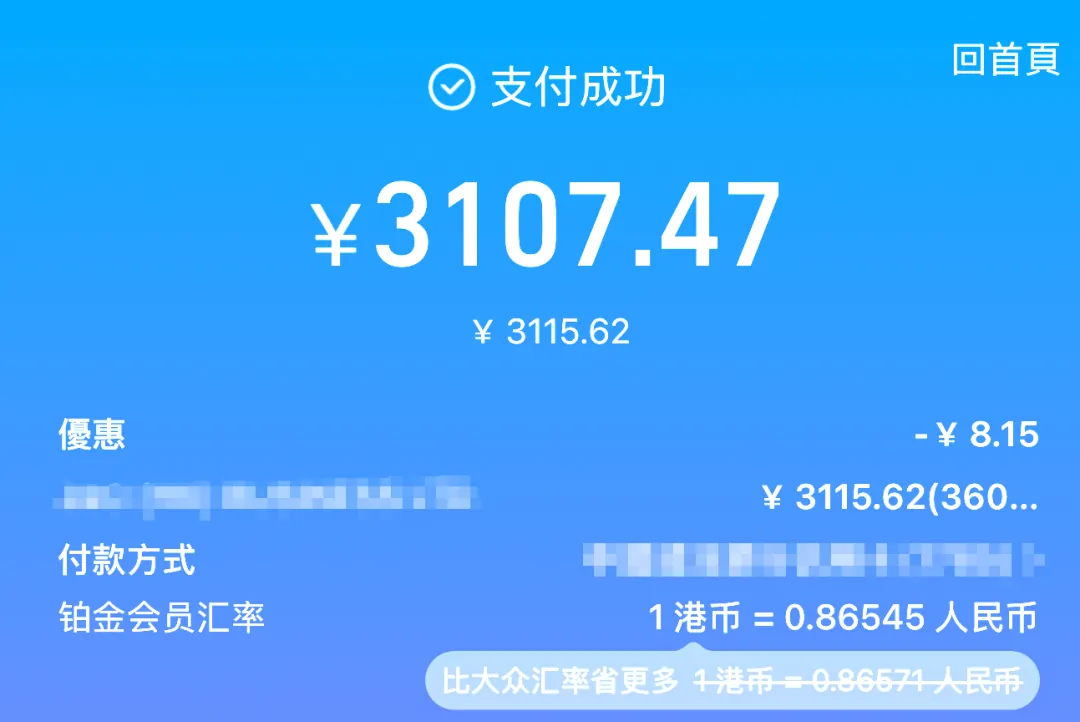
A company has to be fed
Registration is one-off. Maintenance isn’t.
The business registration certificate is renewed once a year, the annual return is filed once a year, and every year around this time it comes back to find me.
Paying for the annual renewal is the easy part; the audit comes after. Luckily the year’s books have been tidied up automatically by AI every month, so there’ll be no last-minute cramming.
This time next year the bill will come again. I’ll look at the books once more that day, and I’ll know how the year went.
New articles and quick notes from Peter.