 Peter Founder
Ignored for 10 Seconds, the Push Prompt Disappears
Push Notifications
Hi, I’m Peter.
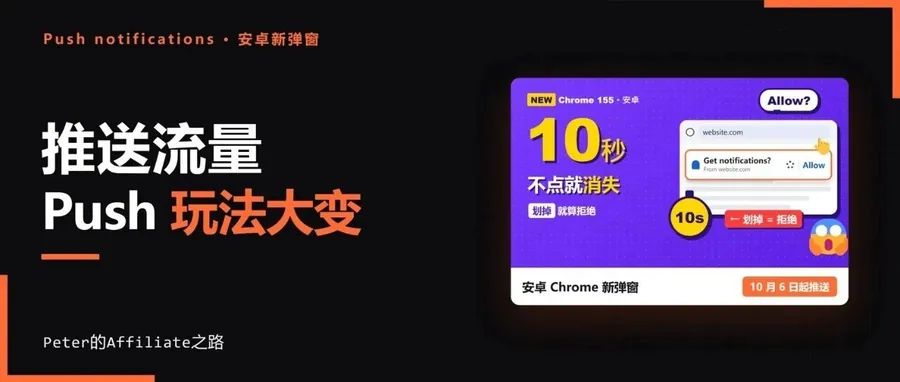
Chrome 155 has recently started rolling out to Android phones, and the push subscription prompt has changed. If you run push, this matters.
In short, the old subscription popup that blocked the whole screen is now a small card under the address bar, and it collapses by itself if nobody taps it.
I read the official announcement and also checked a few details in the Chromium code. Here are the key points and my thoughts.
01 What Chrome changed
On July 22, Google announced the change on the Chrome developers blog, saying it is meant to reduce notification prompt fatigue.
It comes down to three things.
It doesn’t block the page: the card sits under the address bar, the page stays visible as usual, and it no longer dims.
No tap, it collapses: by default it folds away after 10 seconds and counts as no choice made. The official post doesn’t give this duration; it’s the default value in the Chromium code, and Google can adjust it remotely.
Swiping it away counts as a rejection: if the user swipes the card away, it’s treated as a rejection. Don’t allow is tucked into the gear menu, so it takes one more tap.
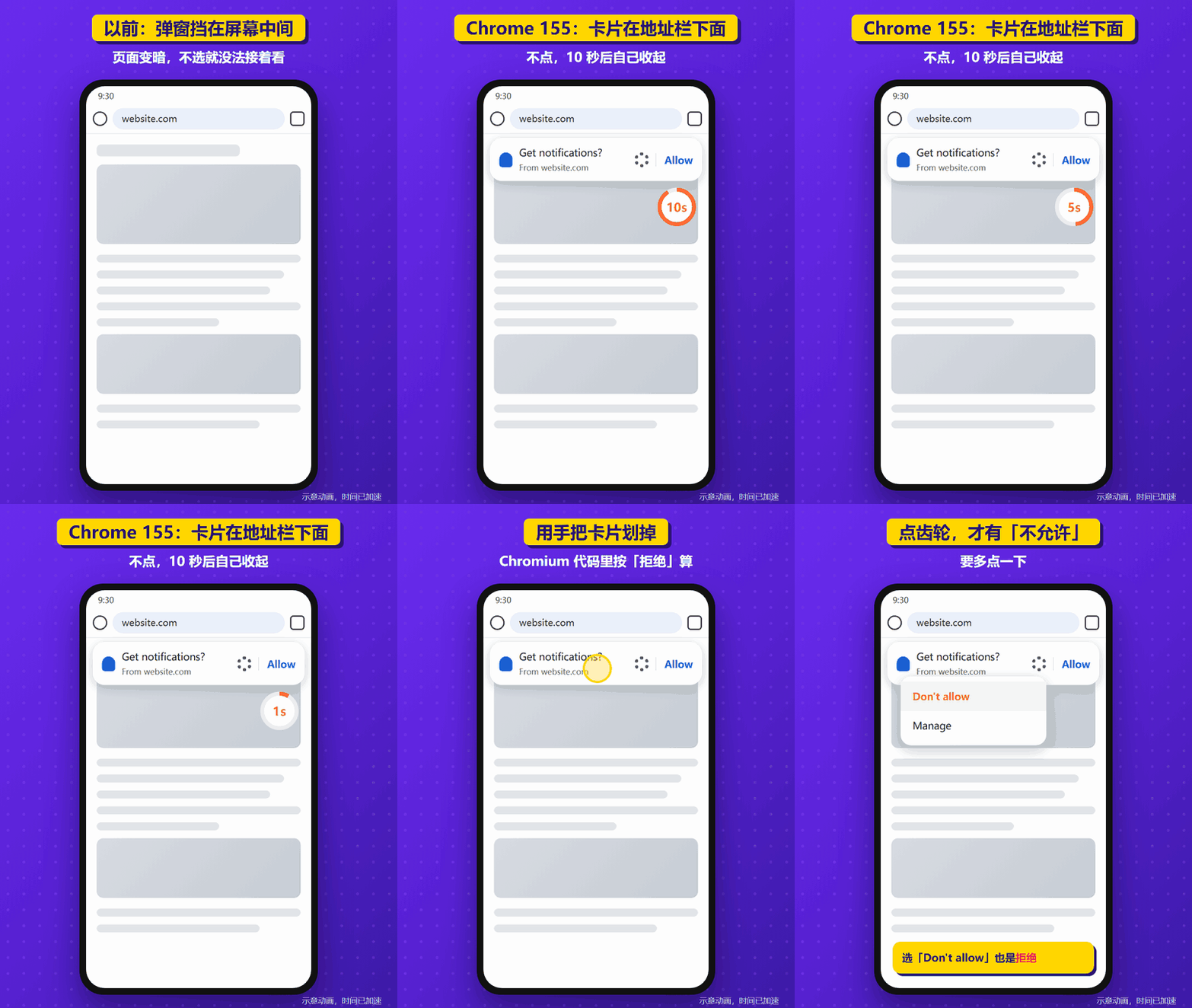
The new push subscription prompt
The stable release started rolling out on October 6, and phones are updating gradually, so for a while both the old and new prompts will be out there. The official post only mentions Chrome on Android.
02 People who didn’t tap can still subscribe later
A user who didn’t tap at the time can still subscribe later by tapping Subscribe in the site settings, to the left of the address bar, as long as the site has shown a permission request before.
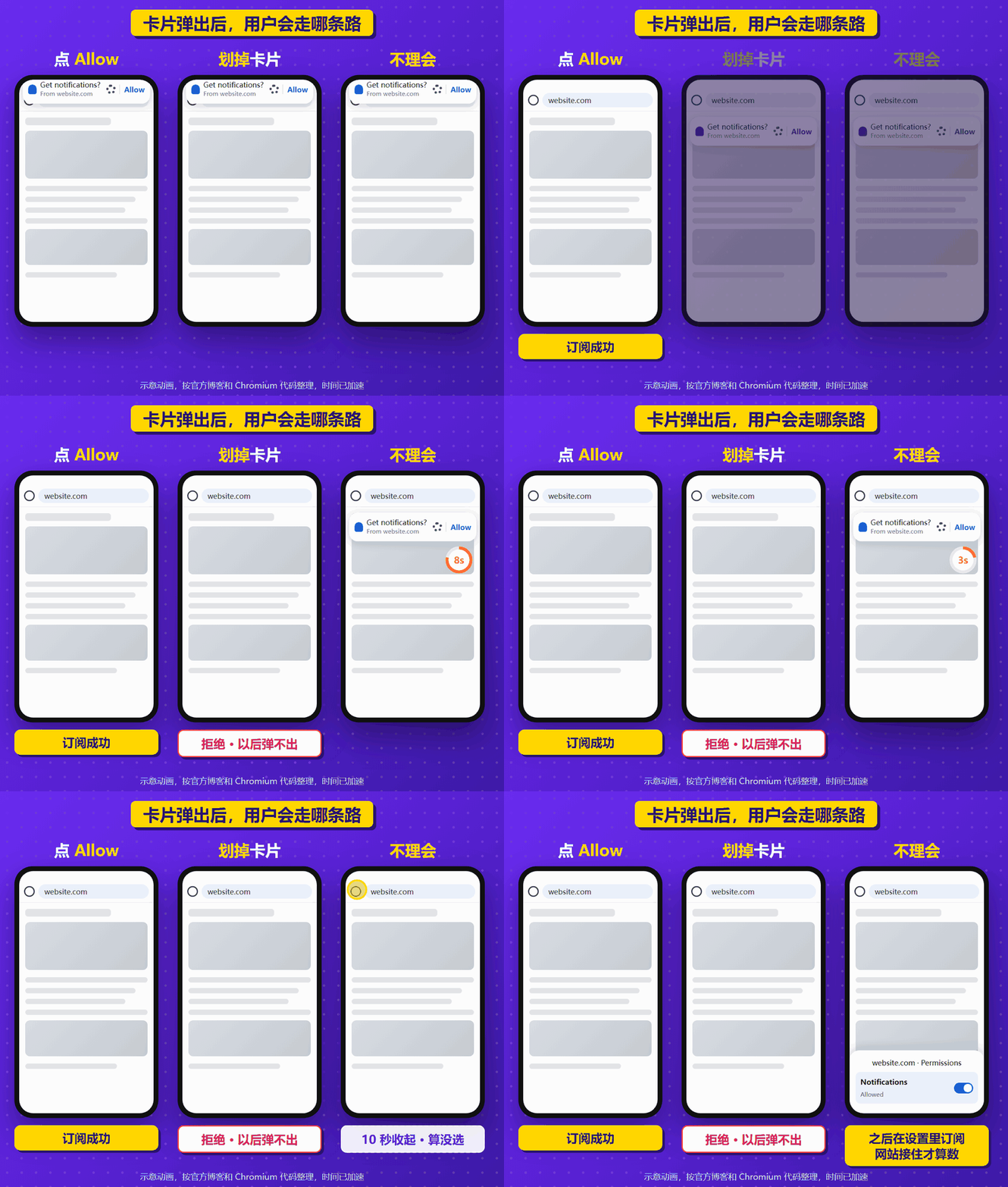
The three paths after the card appears
The official post also warns that your site code needs an extra piece: listen for changes in the notification permission, and subscribe as soon as it becomes allowed. Without it, those subscriptions won’t be caught.
03 What it means for us
I’ll split this into two groups.
If you run push: what changed is the subscription request. Existing subscribers still receive pushes, so volume won’t drop all at once. But new subscriptions will definitely decrease, buying traffic will get pricier, and monetizing gets harder.
If you monetize through subscriptions: the impact is more direct. On landers that fire the subscription prompt as soon as the page opens, the subscription rate may drop straight down. If you use a platform’s push script (ProPush, RollerAds), check whether the platform has updated along with the change.
04 My thoughts
- Google keeps tightening in one direction.
In 2019, Chrome required users to interact with the page first before back-button scripts would take effect. Last year, in my post on push publishers, I made one point: don’t do redirects with no interaction; wait until the user has clicked on the page, then show the subscription box. With 155, the official advice is also not to request permission as soon as the page opens.
- There will be fewer subscriptions, but the ones that remain cost more.
When the popup blocked the page, my guess is that some people tapped Allow just to get rid of it. Now they can keep reading without tapping, so that kind of subscription will get rarer and rarer.
If you run push, the new-subscriber window (0-3 day) will get more expensive, though quality may be better. If you sell subscriptions, the request has to come after the user has engaged, and a page that makes people want to subscribe will hold on to them more easily.
Overall, the push dividend is narrowing, but it’s still there. In 2019 I treated push subscriptions as passive income and put a snippet of code in my landers; subscriptions that just show up from leaving code in place like that may disappear soon.
I hope this article helps!
Translated from the Chinese original published on 2026.10.19.