 Peter Founder
Claude KYC Verification and Google's Back Button Hijacking Ban
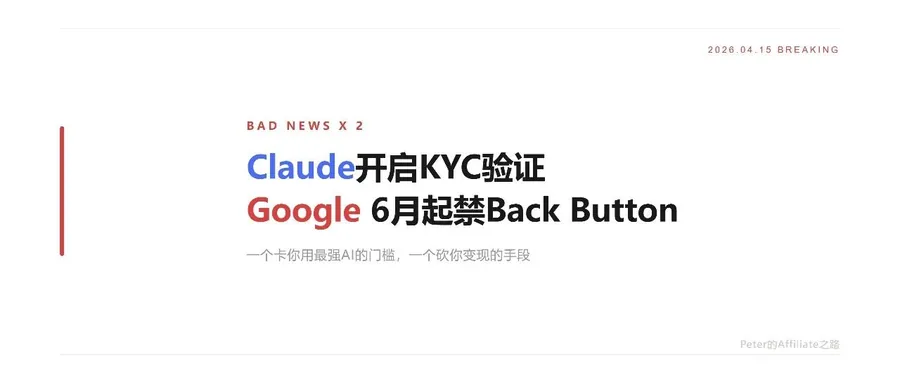
Woke up from my afternoon nap, scrolled X, and half the sky had fallen.
One item concerns the AI tool you use: Anthropic has started identity verification (KYC) for Claude users. You upload a government ID plus a selfie.
The other concerns your ad revenue: Google announced that from June 15, Back Button Hijacking is classified as spam, in the same tier as malware.
One raises the bar for using the strongest AI; the other cuts off one of your monetization tools. Let’s take them one at a time.
Part 1: Claude now asks for your ID
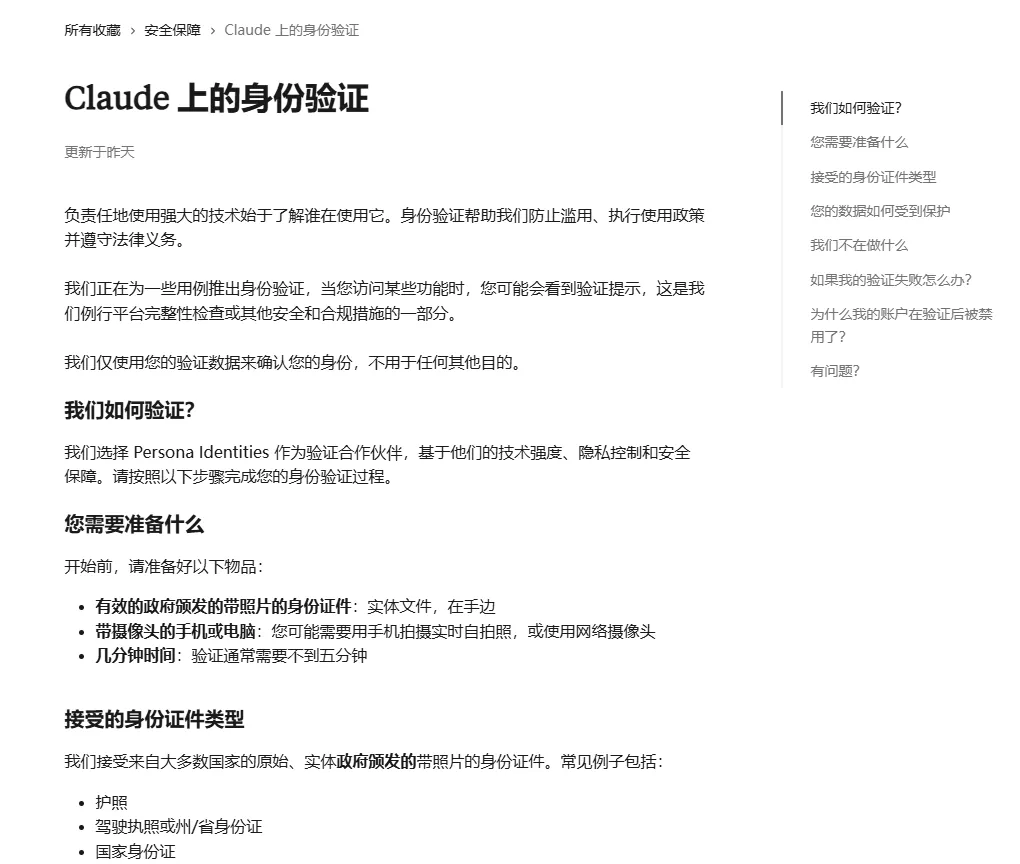
It spread across X in the afternoon. The trigger was an identity verification page that appeared in Claude’s official support center, stating that Claude is rolling out Identity Verification.
Two things: a government-issued photo ID (the physical document, not a scan), plus a live selfie or a photo taken with your camera.
Being able to use the official Claude or the API reliably was already hard enough; accounts get banned at the drop of a hat. Most people here have to find a trustworthy relay (proxy) service just to get access. Now it’s real-name verification on top.
And it’s not just Claude. OpenAI has already followed suit.
The trend is clear: from now on, using AI tools means first proving you’re in a region where they’re allowed.
I haven’t been hit with the prompt myself yet, but it’s there in black and white on Anthropic’s official support page.
While things still work normally, do this right away: export and back up your important conversations, and make sure your account information is real and verifiable.
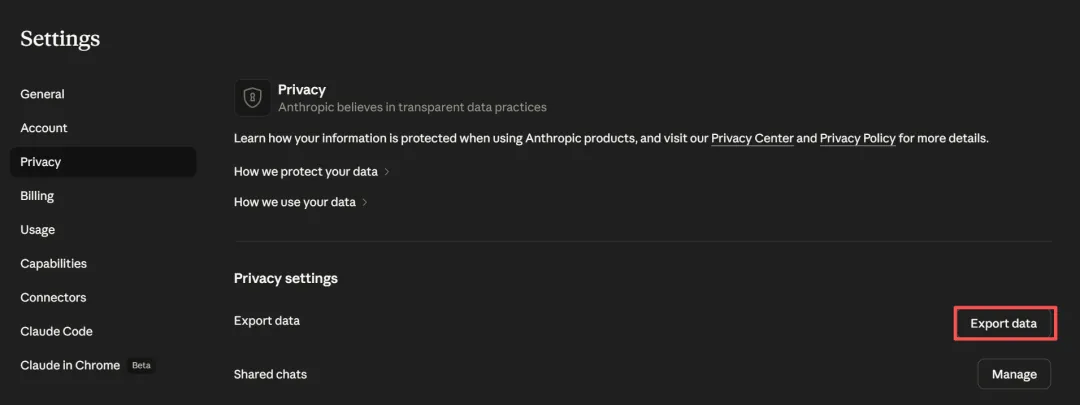
Download your conversation history. This is a step many people skip. Your past conversations with Claude hold a lot of valuable material: code, analysis, plans. If verification goes wrong and the account gets locked, all of it is gone. Go to Settings - Export Data now and pull it down.

Part 2: Google kills the Back Button in June
On April 13, the Google Search Central Blog published an announcement: Back Button Hijacking is officially classified as spam, under the malicious practices category. Enforcement starts June 15.
A user hits back on your page and, instead of returning to the previous page, lands on an ad page or a recommendation page they have never visited.
Technically it’s simple: use history.pushState() to stuff fake entries into the browser history, listen for the popstate event, and redirect when the user hits back. A few lines of JavaScript will do it.
Anyone who has run Pop or Push traffic has seen this trick; some ad SDKs even ship with it built in.
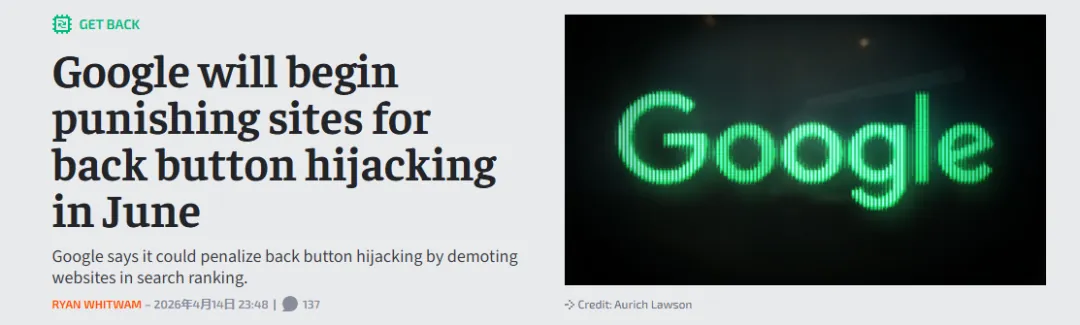
(Source: Ars Technica)
Part 3: If you run Survey / LP arbitrage / Pop
The Back Button script used to be a common monetization optimization: after a user finishes the survey and clicks the CTA, hitting back fires the DirectLink one more time, so the same visitor gets monetized once more.
People have tested it: adding a Back Button lifts revenue per visitor by 10-20%.
Honestly, everyone just assumed an LP comes with a Back Button.
Especially with the ProPush Constructor, where it’s built right in. After June 15, think twice before enabling it.
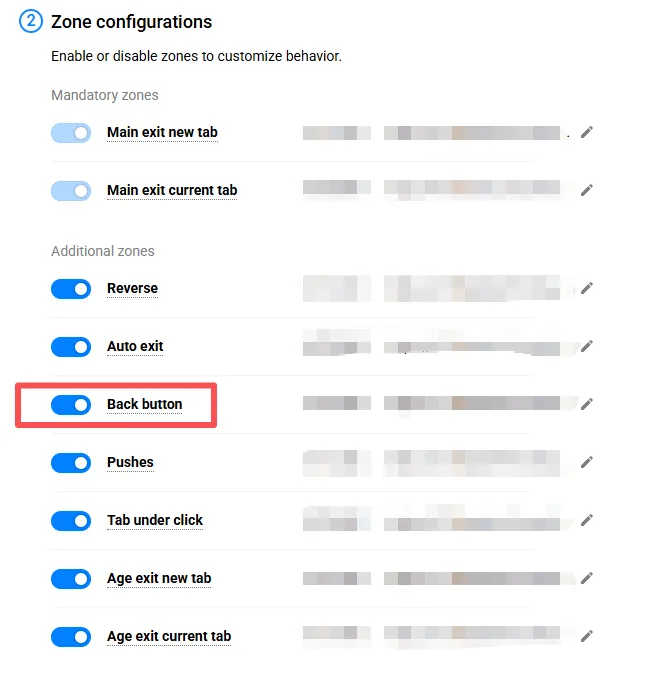
Publishers using monetization code from Monetag, Adsterra and the like: Google made a point of saying this in the announcement:
“Some instances of back button hijacking may originate from the site’s included libraries or advertising platform.”
Even if it isn’t code you wrote, and it’s the ad SDK you included that’s doing it, you get treated the same.
Some people think: I don’t rely on Google organic traffic, so a ranking penalty doesn’t affect me.
But once your LP domain is a spam site in Google’s eyes, the risk of a GSB (Google Safe Browsing) flag goes up too.
The other half of the sky hasn’t fallen, though. For KYC, there are other large models to switch to.
And after Back Button, the core of the survey arbitrage model still holds: DirectLink CTA clicks are the bulk of the revenue, Push subscriptions are unaffected, and Popunder itself is unaffected. One layer fewer, but nowhere near a collapse.
One last word
On the surface these two have nothing to do with each other: one is an AI company, the other a search engine.
But the logic behind them is the same: platforms are tightening up.
The AI company doesn’t want you using its strongest model anonymously. The search engine doesn’t want you monetizing traffic with code tricks.
Look back: Meta’s video verification prompts are getting more frequent, Google brought in Core Web Vitals, exchanges went full KYC, Apple restricted IDFA.
The gray zone doesn’t have much time left.
New articles and quick notes from Peter.