 Peter Founder
Meta Muse AI Agent Buys for You: Who Do Ads Target Next?
Muse
Hi, I’m Peter.
A few days ago I was looking at Muse, which Meta released this month. It’s hugely popular.
Simply put, it’s an AI agent that does things for you: you say what you want to buy, it opens a browser on its own, compares prices and places the order, asking you once before it pays.
If no human is present at the ordering step, who do ads target from now on? Here’s what I’ve seen and what I think.
01 What is Muse
It launched on September 8. This was Meta’s announcement at the time:
The Muse announcement
Three things, as usual.
Its own computer
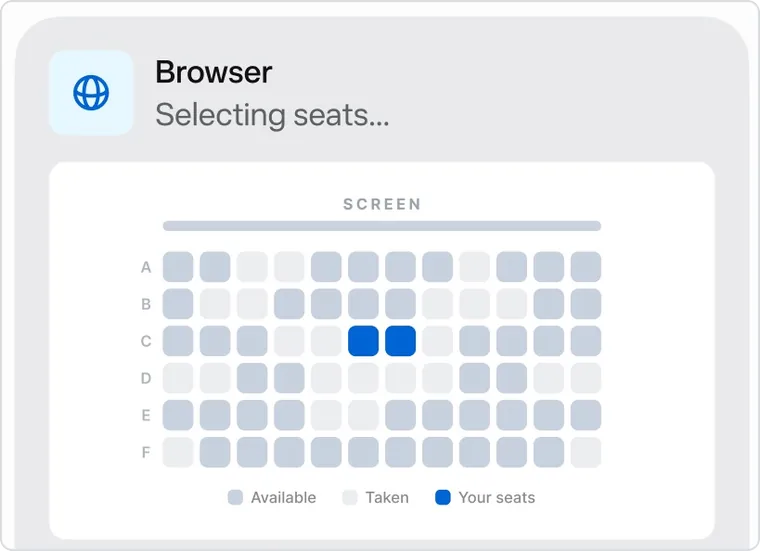
Muse has its own cloud computer. For things like booking tickets or a table, it opens a browser and clicks through itself:
Muse opening a browser and picking seats on its own
It asks before paying
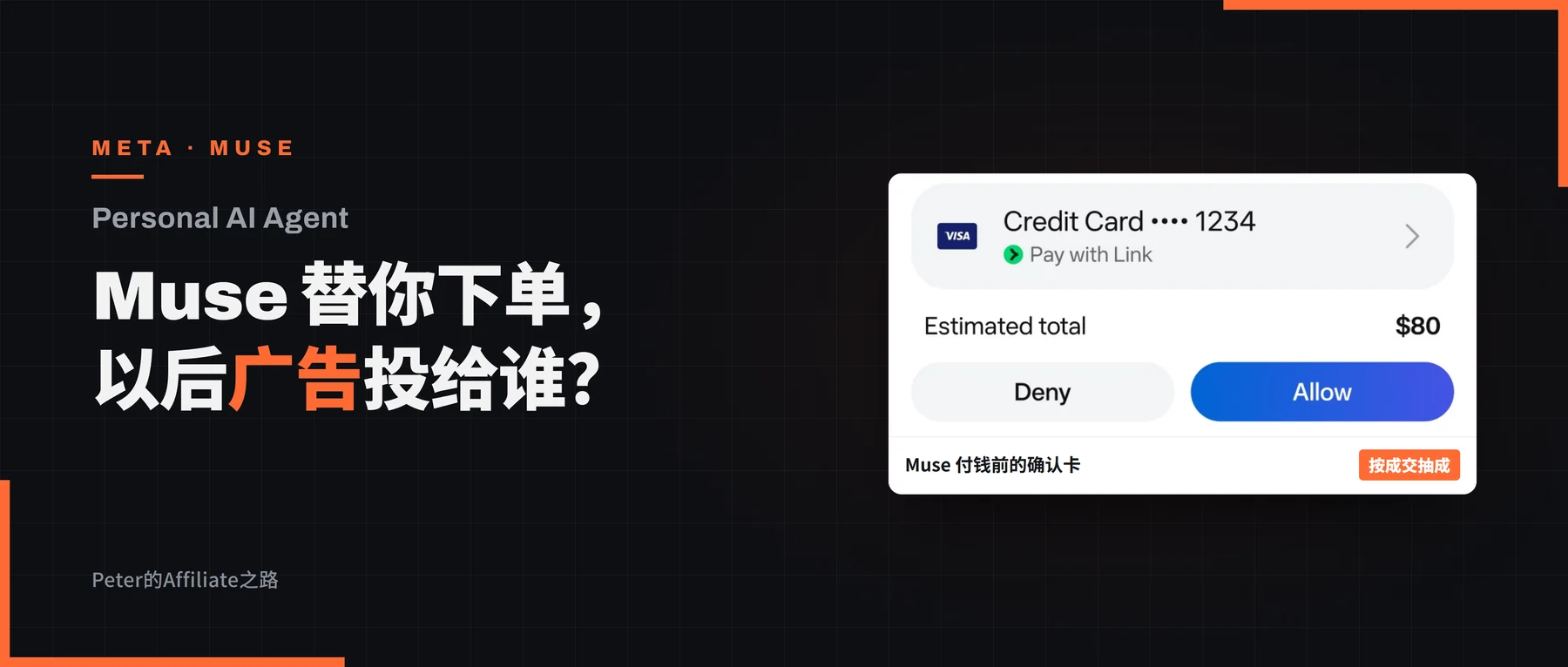
This is the shopping demo Meta released, asking it to pick a travel stroller:
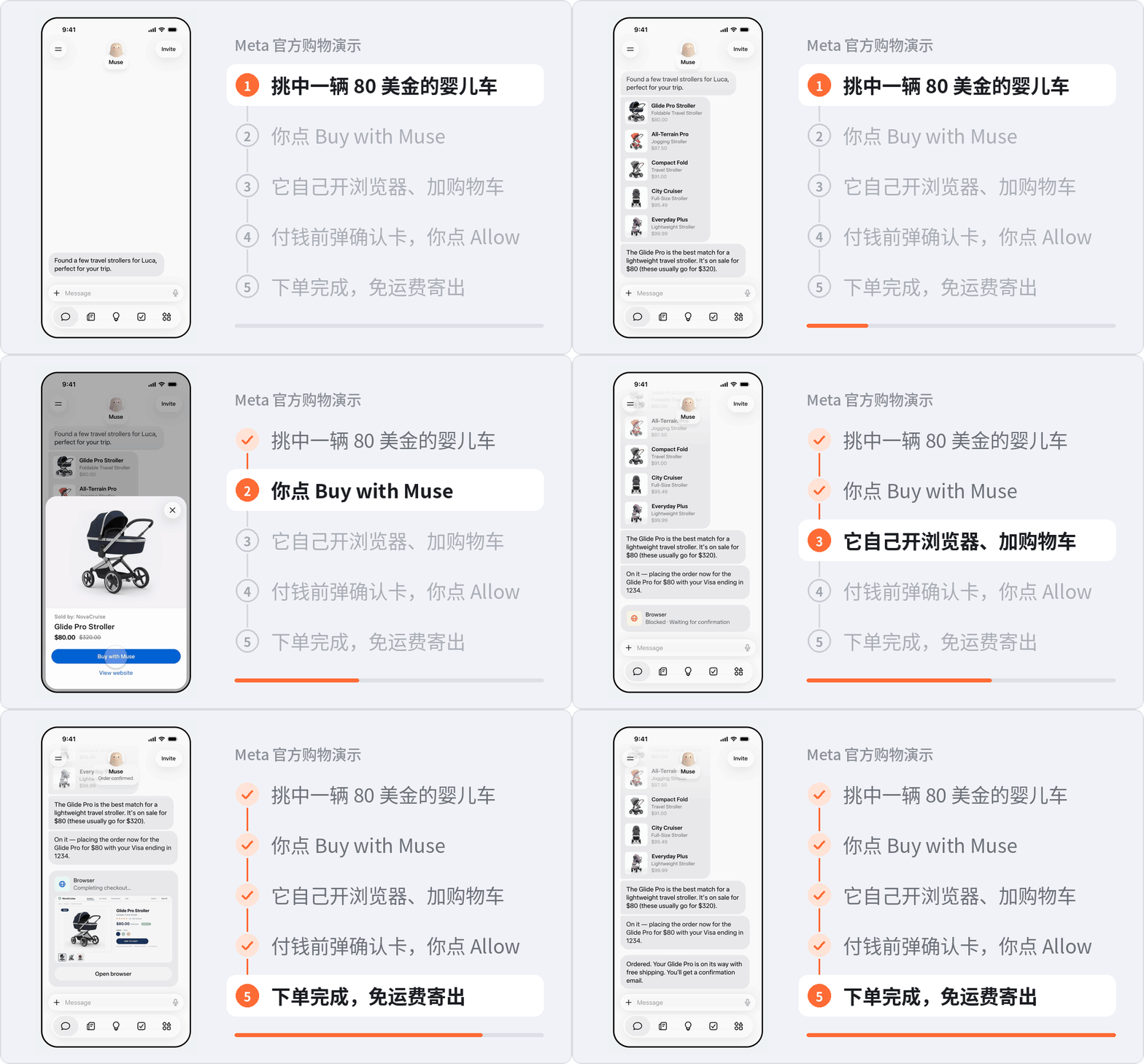
Meta’s official shopping demo
It opens a browser on its own, adds to cart, and pops up a confirmation card before paying. Only when you tap Allow does it place the order.
The payment on the confirmation card reads Pay with Link, which is Stripe’s Link.
Muse gets a one-time card number; it can’t see your real card number.
Plenty of places to buy
Every store on Shopify can be checked out inside Muse.
At the Connect conference on September 23, Meta also announced retailers like Walmart, Best Buy, Sephora and Gap coming on board.
It took off fast. Apptopia estimates 1.8 million iOS downloads in the US and Canada in the first 12 days.
ChatGPT, over the same window back in its day, had 1.3 million.
About ten days after launch it hit No. 1 on the US App Store free chart. For now, though, it only works in the US and Canada.
02 How Meta makes money
Meta’s revenue last year was $201 billion, 97% of it from ads.
But with Muse, the ad line has been cut off. The announcement states that the data from its conversations and its cloud computer is not fed to Meta’s ad system.
So where does the money come from? Zuckerberg was blunt about it at Connect: they’re willing to hand out tokens by the handful because they want to take a small cut of transactions later.
How big a cut hasn’t been announced. According to Digiday, merchants pay it, not users.
Merchants used to buy ad placements and pay per impression or per click. From now on, when Muse buys the product for the user, the merchant pays per completed sale.
Put plainly, that’s the CPS we do every day.
Muse shopping on your behalf drew the biggest reaction from Amazon.
Both sides have their own version. The number I care about more is a different one: Amazon’s ad revenue last year was $68 billion.
That money depends on people searching on Amazon and browsing on Amazon. When an agent does the buying for them, nobody sees the ad slots in the search results.
Amazon is also putting ads inside AI itself. At the end of March it launched Prompts in the US, charged per click.
Prompts sit in search results and on product pages, and clicking one can take you straight into a conversation with Amazon’s own AI shopping assistant:
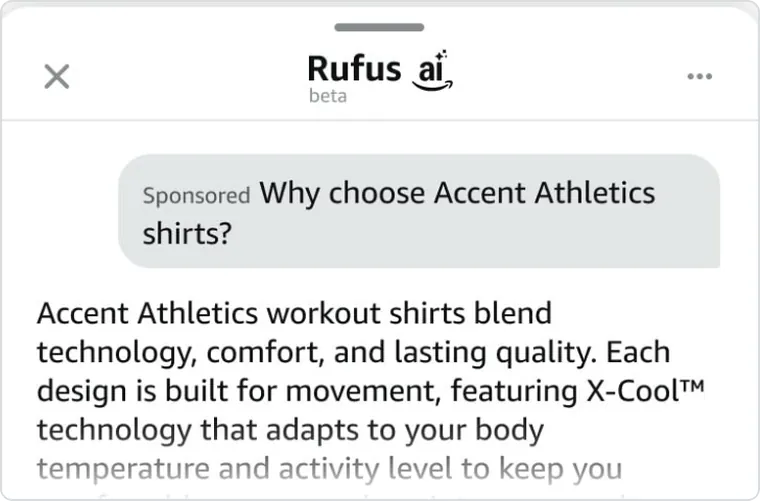
Amazon’s Prompts ad
03 Who ads target from now on
Ad money won’t disappear; it just goes somewhere else.
To people
An agent can place the order for you, but the urge to buy still mostly comes from scrolling.
Muse’s own promo images have exactly this kind of example:
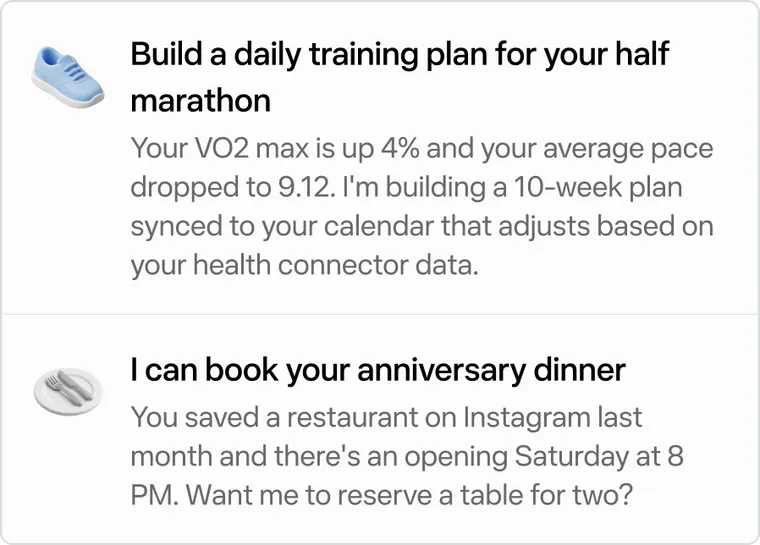
Muse’s Ideas page
You saved a restaurant on Instagram last month; it sees there’s a table at 8 pm on Saturday and asks whether you want to book.
OpenAI launched Instant Checkout, paying directly inside the chat, last year, and pulled it back in March this year.
A Walmart executive has said that conversion on purchases made directly in chat is only a third of what it is when people click through to the site and buy there.
Users are willing to search in AI and compare in AI, but they still want to handle the payment themselves. So ChatGPT turned around and started selling ads:
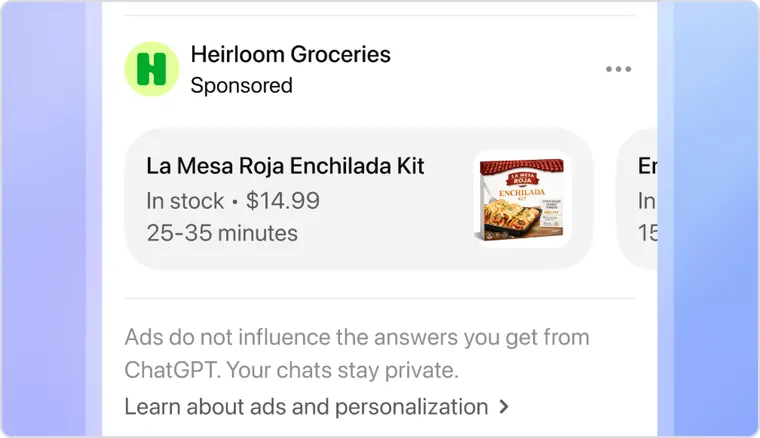
Ads inside ChatGPT
Testing started in the US in February. It’s now open in more than 60 countries and regions, and in under 200 days it reached $1 billion in annualized revenue.
To agents
An agent won’t page through ten pages with you; it usually recommends just one or two. Which ones depends on price, stock and reviews, and on whether AI can read your product page.
Adobe checked: on retail sites, AI can read only 66% of product pages on average.
Google’s Direct Offers, released in January, is aimed squarely at this.
The merchant sets up an exclusive offer, say 20% off. When the AI judges that the user is about to order, it puts the offer into the AI Mode answer.
To platforms
Meta plans to take a small cut per sale, and OpenAI’s Instant Checkout originally also had merchants pay after the sale.
Starting to smell familiar? The platforms have become affiliates themselves.
We used to bring people to the merchant and take a commission when the sale closed. Now the agent walks that whole path in the affiliate’s place, and the commission lands with the platform behind the agent.
04 My thoughts
- Short term, the impact on us is small.
Muse is only in the US and Canada for now, and what’s plugged in is mostly retail and groceries.
The CPA offers we normally run don’t touch it yet.
- CPS is becoming the way big platforms charge, and that matters more.
We get paid on clicks and postbacks, and the network recognizes the click ID.
When an agent orders from its own cloud computer, maybe nobody ever clicked the link. Who does that sale get credited to?
- ChatGPT ads have opened in Southeast Asia.
On September 23 they opened in the Philippines and Indonesia.
That’s a new traffic entry point inside the chat box. Unlike other traffic, users see you while they’re asking a question.
Which offers can run, how strict review is, how expensive it is: all of that is still at the earliest stage.
Overall, agents ordering for people isn’t all bad news for us. Big platforms moving toward settlement on completed sales is a clear trend.
If you’re interested in this kind of agent advertising, ChatGPT Ads is the place to start.
I hope this gives you something to think about!
New articles and quick notes from Peter.